Google Custom Search

Monday, September 22, 2008

Spiritual Growth - The private relationship between you and God


GOD: Now there's a loaded word! If you want to see an argument break loss bring up religion or politics.
My relationship with this label has had its ups and downs over the years, but in the end it's just a word. Stick in any combination of sounds that works for you, be that Universal Consciousness, Higher Self, Jesus, Buddha, etc. What's important is NOT what you call it; rather that you understand that I'm referring to the part of you that is within and beyond--a calm and peaceful place void of ego. This is what I'll call Spiritual Source--I could just as well call it Buga-Buga, but to avoid too much silliness, we'll stick with Spiritual Source.
Dr. Douglas Brooks shared a story about three years ago at a yoga teacher training in Massachusetts saying that his teacher "never shared his spiritual beliefs with his family. Not even his wife." Yet, this master spoke of his private practices with Dr. Brooks. This is because Douglas asked. The Indian culture was set up in such a way that
one's spiritual life was private but not secret.
This concept aligned deeply within me. As soon as one is off yakking about their beliefs to others the ego (or attachment) gets involved, and in a severe case people are attempting to shove their beliefs onto others. Did you ever have someone ring your doorbell over dinner to tell you about "their God?" Oh, pleeeeease! These are total strangers invading someone's home-time to push ideas. Tell me that's not ego driven.
As a teacher of yoga, which is by definition a spiritual practice, it is the teacher's responsibility to guide others spirituality. This is not to be confused with religion--the rituals and traditions. This is about helping others to experience for themselves what Spiritual Source is for them. In a class or in the student-teacher relationship, this is part of the agreement. However, this does not give the yoga teacher license to even attempt to guide those that do not want guidance. It took me almost seven years to understand that when I tried to help my sister with issues by providing my outlook on Life, I only drove her farther away; she hadn't asked for spiritual guidance, she had only wanted a listening ear.
Dr. Wayne Dyer, one of America's great spiritual leaders today, reminds us again and again to stay private and keep your relationship with Spiritual Source sacred and just within your own heart. I've never quite gotten this, until last Friday. Why not share your profound inspirations with a close loved one? I'm not talking about knocking on doors and telling my neighbors--who quite frankly could care less. I'm talking about expressing the excitement of spiritual growth with your most intimate partner.
Well, I did this last week and awoke the next day in doubt--the thinking mind had stepped in. I believe this is why Dr. Dyer advises so strongly to keep your personal spiritual path just that--personal. No words can accurately describe the spiritual realm. Language can point to it, but not fully explain it. So the simple act of attempting to describe a remarkable spiritual experience, is always lacking. Also, one must consider the reaction of the other person. It's like telling someone the name you've chosen for a baby while still pregnant. If the reaction is hesitant or someone tells you why/how they hate that name, then it mars the joy of using that particular name. When I attempted to describe my spiritual life and shifts in it to my partner, the thinking mind slipped in and took hold. This is in part due to simply using words for something that words can not be truly used for and in part due to a conversation that ensued regarding where inspirations come from and what the results mean. Suddenly the peaceful surrender that I had been experiencing was replaced with worry, doubt, and "trying" to figure it out.
Admittedly, a stronger person may be able to share how the universe works through them and how sometimes the most perfect actions or words just appear, but this was not the case for me. For now I will focus on returning to that place of peace and hold my tongue until the desire to share stems only from knowing it is the right time and not from anxiousness or excitement.
Love Much,

Kris
http://www.totalhealthyoga.com/

Today is the first day of the rest of your life!

Friday, September 12, 2008

Yoga Asanas -- What's the point?


Lately I've been questioning the usefulness of asanas. When a teacher, usually in the Anusara style, says to "open your hamstrings in order to let the divine in" I (sort of) want to puke. (I must disclose here, that I studied Anusara--and received my hatha yoga certification from Todd Norian--for 2-3 years.)


There are plenty of people out there that can forward bend and place their head between their legs and there's nothing divine about them. Let me rephrase; their egos are so huge that their actions and words are far from divine. Yes, we're all divine--I really believe that. But some of us hide it better than others.


These same teachers--that tout being a better person by opening your hips--speak frequently of "taking it to the next level." I'd like to think that means growing closer to self-actualization, but unfortunately they are usually referring to a more difficult pose. Perhaps these folks heard it from their teacher and something was lost in the translation--or maybe the teachers of the teachers have gotten so caught up in the "glamor" of beautiful poses that they themselves have forgotten why we do them at all.


In the west countless people associate yoga with asana, which is almost laughable. There are many types of yoga that don't even consider postures, such as the yoga of devotion, chanting, or self-less actions. Hatha yoga is a subset of yoga as a whole, and this subset includes the use of body movements and positions. Yet, even here the intention is to take the "path of the higher life" (Lectures on Yoga by Swami Rama, pg 12). Let's be honest, that doesn't mean to get your feet behind your head! Really, will that bring you closer to God or a deeper knowing of the authentic self? Admittedly, you might just get those feet back there along the way, but it's NOT THE GOAL. Not only that, from personal experience I can say some of us are not meant to do such challenging poses.


On the other hand, when I began hatha yoga just over 10 years ago, if the teacher had sat us all down and said, "Close your eyes and we'll begin with a 20 minute chant. Focus on the Om sound and simply let your thoughts drift by," I would have been out that door so fast no one would even know I had been there at all. For starters I couldn't sit still for 20 seconds, let alone 20 minutes! Now I enjoy, even relish, in the quiet solitude of meditation; but it's taken a number of years to get to this point. In the silence I commune with God, higher consciousness, or a deeper awareness of what is (whatever you want to label it). This has become a valuable, if not necessary, part of my daily life.
Did asana help me get to this point? Most definitely. I remember the first time a teacher had us lie in savasana for over 5 minutes. I wondered when he was going to finally let us get up. "Antsy-ness" was setting in. It took almost two years of practice until I could remain relaxed in comfort for 10 minutes or more. Perhaps a slow learner, but as mentioned earlier I couldn't even sit still for 20 seconds! So, 10 minutes without moving was pretty amazing stuff.


Upon honest reflection, my beef with asana is not asanas fault. It's a wonderful tool when used correctly. Just as a hammer is great to drive a nail into wood; thus connecting items together. However that same hammer may be used to harm another human being or animal. It's powerful, but how you use that power is more important than the tool itself. Asana may be used to embody your breath and mind, to bring awareness within and quiet all the distractions of everyday life. Used inappropriately it is nothing more than a means to cause more separation from everyone else and to enhance your ego. "Yoga" literally means to yoke or bring together. So you see, anything that separates us from each other is NOT yoga!
Aadil Palkhivala put it beautifully last week in Chicago,
"Yoga must use asana--if at all--to uncover and then live dharma. Otherwise asana is at best an exercise and at worst a means off your path."
So, to asana or not to asana? That is the question. Only you can decide what works for you, but most importantly be willing to change that answer! If the answer never changes, you are not growing. And to live is to grow. And to practice yoga is to live.
Speaking for myself, 3 years ago asana was a big part of my practice. Sometimes to feel fully alive I would do 2-3 hours of asana and 30-45 minutes of pranayama and meditation; I did this 5-7 days a week.
Today is different; I begin and end every day with meditation. Sometimes pranayama finds its way into this set aside "connection" time. Asanas for about 1 hour 3 days a week, and that's mainly because I teach asana I feel a responsibility to keep up with it. More walks outside and tennis with my family. The body thanks me for this. The mind enjoys being on the mat and the energy pulsing through the body is wonderful, but the body complains and some of the ligaments have been compromised over the years. To honer what is, I work more on integration and strength building than opening. This is today. I cannot say what will be tomorrow. Yoga brings awareness, if you let it. So, tomorrow I will listen and hopefully respond to my body, my mind, and my soul with or without asana.

Love Much,

Kris
http://www.totalhealthyoga.com/

Today is the first day of the rest of your life!

Thursday, September 11, 2008

It's not what you do, it's how you do it that matters.


We've all heard the expression,


It's now what you do, it's how you do it that matters.


Aadil Palkhivala brought this statement to life earlier this week. Aadil is a yoga master and commonly referred to as "the teacher of teachers." He's been practicing yoga with Iyengar since the ripe age of 7 and has taught some the better known teachers today, such as Shiva Rea.


This week he is in Chicago (a mere 2-3 hours depending on traffic from me). So I attended one of his classes/workshops. The title was The Five Vayus in Purna Yoga™ Standing Poses. In this 2 hour standing posture class, there was some lecture, warm up, cool down, and only 4 standing postures. I hadn't noticed how few there were, until later reflection on the class. All of them were done first to the right and then to the left and a couple of them were done twice, but what shocked me was how hard I worked and how my entire body responded. Two days later my butt and legs still feel the effects--which translates as they're sore as hell! Well, the "good" kind of sore. The one that let's you know that you've challenged yourself and grew some muscle tissue.


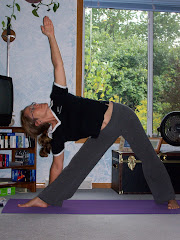
As I sat on the couch last night I wondered, how after a measly 4 postures (trikonasana/triangle, parsvakonasana/side angle, virabhadrasana I/warrior I, and virabhadrasana II/warrior II) could I feel so much? After all, I do plenty of poses like these--or even these--2 or 3 times a week.


The answer came, "It's not what poses you do, it's how you do them that matters." I'm mindful and breath steady and easfully (like the sutras instruct) through my practice, but what was missing was the "huspa". You know, the oomph! Now I've practiced with plenty of energy in the past, and usually it ends in a lack of awareness and injury. Aadil led us in a different manner.


Here are the two main vayus (winds) that made the biggest difference. First there is apana which relates to the earth element. As you exhale root your legs like rocks heavily connected to the ground. Then inhale with samana vayu. Samana is like fire lifting vibrantly up from the arches in the feet and through the perineum. To keep up with sincerity in awareness of these opposing forces while maintaining a position for about 6 breaths, provides amazing energy and centering to the body. Between postures, pause with the feet together and notice the effects. Notice if your central nadi/channel is humming or more alive than before. Mine sure was.


I can only speak for myself, but using the imagery of earth and fire along with the breath was magical in my body--much more so than simple alignment and mechanical muscular actions.


Best of luck in your practice,


Kris
http://www.totalhealthyoga.com/

Today is the first day of the rest of your life!

Tuesday, September 2, 2008

Spiritual Seekers

Do you find yourself looking for answers or simply looking? I've been a "seeker" for many years and quite frankly, I'm getting a little tired of it. Maybe it's simply a case of sheer laziness, but I like to think it's a glimmer of enlightenment.

People frequently get "stuck" in search mode. It's like googling for the word "house" and the search engine hangs. Being that google never "just keeps going" and gets stuck in the questing of a subject or word, does that make it smarter than us self-proclaimed "seekers?" Now there's a scary thought!

I met a gal, let's call her Mary, at a Yoga class two years ago. Mary was a bit put-off by any advice or spiritual suggestions. "I've been questing for so long, I'm just worn out and need a break," she lamented.

This sounds like progress. No, really, it does. Think about it, when we're constantly looking outside ourselves for answers and meaning with the mind, the heart (the soul) can be easily forgotten. Ironic but true.

Two options exist, as far as I can see:

1. Keep reading and looking for meaning or understanding while allowing your mind to take over and risk getting lost in the search.
2. Pause and listen to your breath. Stop long enough to hear or feel your heart beating and the blood circulating. Observe. Be present. From this place, and only from this place, read and observe new ideas.

Do you see the difference? Option 1, you are driven from a point of lack and trying to find meaning. This is a fine place to start, but over time we must move onto option 2. When you do, the mind is useful, but no longer controls the show. The heart does. A detachment begins to occur and when you run across something that is true for you, you will feel it inside as if a wave of peace has just washed over you.

To seek or not to seek? Tempting to say, "That is the question." Instead let me summarize with a quote from Dr. Wayne Dyer,


Love Much,

Kris
www.TotalHealthYoga.com

Today is the first day of the rest of your life!

Tuesday, August 12, 2008

3d Eye - not the music group

I wonder is the music group, Third Eye Blind, realizes that this is the state that many of us walk around in all the time--with a loss of connection to Higher Awareness.

In yoga, the third eye is referred to frequently in meditation as a means to encourage a connection with the Divine or Higher Awareness. The Bible says,


“When thine eye becomes single, the whole body fills with light.” ~ Matthew 6:22

In the yogic tradition, this "single eye" is the third eye, also known as the sixth chakra. When opened, you may have a deeper sense of knowing what is true--not because you read it or it makes sense, but you simply know in your heart. Inspiration and intuition stem from this energy center of the body. If you struggle with trusting yourself, work with asanas and meditations geared for this area.

Interestingly, balance poses are recommended to tap into the freedom and wisdom of the third eye. To be honest, I am not sure why. My best guess is that you have to be still and centered and trust in yourself in order to stand on one leg.

Be sure to add at least one balancing posture to your day and work with a teacher and great body awareness to level the hips somewhat while following a deep and steady breath. Allow the head to float skyward like a helium balloon. Enjoy the combination of rooting and "flying" at the same time.

Namaste,

Kris
www.TotalHealthYoga.com
www.TotalHealthYogaClasses.Blogspot.com

Today is the first day of the rest of your life!

Monday, August 11, 2008

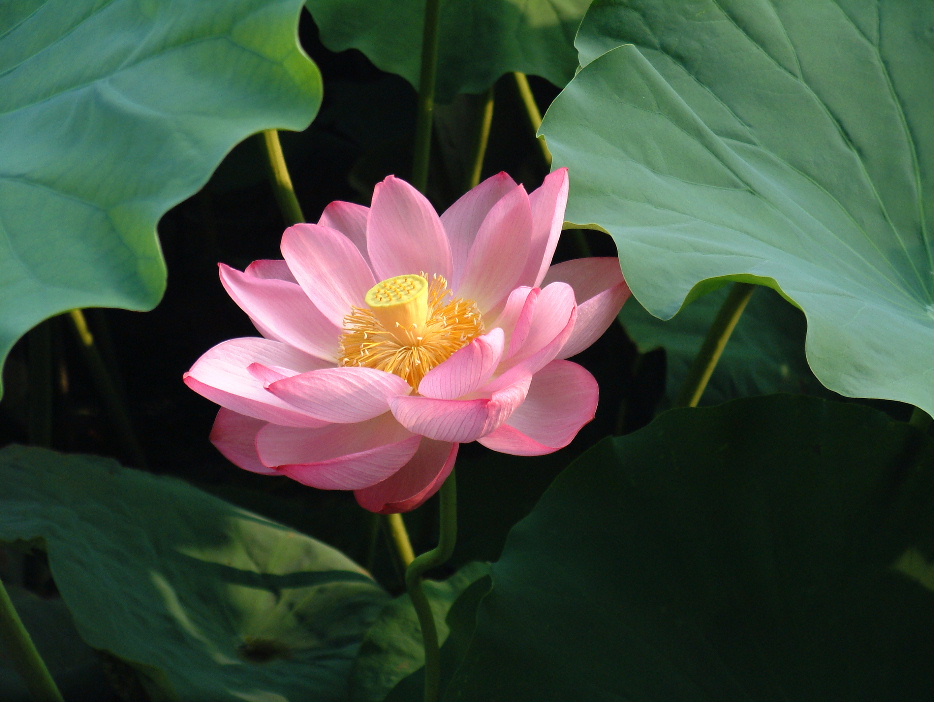
Lotus Flower Symbol


The beautiful strong, and yet delicate, lotus flower is the perfect analogy for our growth as human beings.

Life begins with the roots growing deep into the mud at the bottom of a pond. There is a density and heaviness, just like our material or physical world.

As we grow and experience life, our thoughts come alive vibrating at a higher frequency than the physical body. This is the water where the stem reaches towards the light above.

Finally, the flower opens above the water's surface basking in the light and freedom of the open air.

This is our spiritual journey. To begin with the physical, mental, and at last enlightenment. Here you come to know ease and spiritual truth--the least dense of these three realms.


Love Much,

Kris
http://www.totalhealthyoga.com/
http://www.totalhealthyogaclasses.blogspot.com/

Today is the first day of the rest of your life!

Tuesday, July 29, 2008

Yoga Breathing

Have you ever noticed that the quality of your breath, thoughts, and actions are directly related? In times of stress the breath and thoughts quicken and the breath becomes shallow. Actions tend to be rough, and in extreme stress, even shaky. The breath also follows an irregular pattern and feel rugged.

When you are feeling blissful, the body moves with steady grace; thoughts slow and calm. Inhales and exhales are deep and long.

This is one of the miracles of using the breath. Just as our thoughts can impact our breathing or motions, the reverse is also true. The trick is to guide the breath without strain. When there is strain, there is force. Forcing the breath can have negative results. So, check in every 6 or so breaths to see if your experience is one of more calm or increased agitation. If it's the latter, then return to a natural (non-guided) breath.

The Mohan's say in Yoga Therapy, "...there should be steadiness or uniformity (dirgha) and smoothness or fineness (sukshma).... Dirgha and sukshma are interrelated characteristics: Dirgha is long and sukshma is deep." [p132-133]

To reap the benefits of Yoga more fully, begin every hatha practice with checking in with your breath. Is it steady, subtle, long, and deep?

Maintain these qualities throughout your practice. Remember this is a practice! Over time it will be easier to find smooth, quiet, slow, and full breaths throughout the day. Even set aside a few minutes two or three times a day to check in with your breath.

When you guide the breath to flow in this manner, your thoughts and actions will follow suit.

Love Much,

Kris
www.TotalHealthYoga.com
www.TotalHealthYogaClasses.Blogspot.com

Today is the first day of the rest of your life!

Thursday, July 24, 2008

Yoga Diet Food - Olive Oil


Earlier this week, we got to taking about the benefits of fat in our diets. Ayurvedic science advocates ghee (organic clarified butter), and most western nutritionists promote olive oil for good health.

I was under the impression that sauteing with olive oil was harmful due to the low smoking point. So, years ago I began using canola oil (recommended by the Okinawan Program) for medium to high heat. Saving the extra virgin olive oil for no or low heat.

A wonderful student, M.C., questioned this and looked into it further. She forwarded an article: http://www.oliveoilsource.com/cooking_olive_oil.htm touting the ability to heat olive oil to almost 400 degrees.

This caused me to look into it a bit further, and if you're interested here are some additional links to consider when looking at the healthiest fat available:

http://www.drweil.com/drw/u/ART02970/OliveOil.html

http://www.realage.com/ct/tips/3184http://www.drweil.com/drw/u/id/QAA400093

http://news.bbc.co.uk/2/hi/health/4469370.stm


Tasty-looking recipes!! -- http://mayoclinic.com/health/food-and-nutrition/NU00203

In summary, Dr Weil is a HUGE proponent of cooking with only olive oil. On the other hand, the Okinawa Program sites canola oil as the healthiest (pg 30). Chopra is a fan of ghee and olive oil.

So, what's best? Consider the smoking point. http://www.whfoods.com/genpage.php?tname=george&dbid=56 describes the importance of not heating an oil to the point of smoke.

In the end, it sounds like the answer lies in what type of oil and how it was processed to determine if it's wise to use with heat. A good rule of thumb could be: If the oil smokes in the pan, it's too hot.

My sister used to save her extra virgin oil for salads and flavoring after cooking. The "regular" olive oil she used when it'd be heated. Her reasoning was cost and flavor. Perhaps, without knowing, it was healthiest too--http://whatscookingamerica.net/OliveOil.htm.

Now time for some fresh whole wheat bread dipped in some herbed extra-virgin olive oil!

Love Much,

Kris
http://www.totalhealthyoga.com/
http://www.totalhealthyogaclasses.blogspot.com/

Today is the first day of the rest of your life!

Monday, July 21, 2008

Pure Essential Oils - Lavender Oil


There's nothing like an eye pillow scented with lavender after a yoga practice to bliss out. In the interest of easy washing, I use wash cloths scented with lavender for students, and today a question came in:

"What do you do to get the lavender scent in those towels? I wanted to do that with my pillow cases and wasn’t sure if you bought special detergent or just put lavender oil in the wash." J.D.

It's as simple as sprinkling a few drops just before bed.

The cool thing about this wondrous plant is that for most people it can be safely applied directly to the skin. A matter-of-fact lavender is a well-known burn remedy. If you have your own eye pillow for savasana (corpse, the final relaxation of most yoga classes), store it in a zip-locked bag and periodically add a few dashes of this essential oil. Avoid getting the oil in your eyes; once it's well soaked into the pillow (baring any skin sensitivity) you may use the pillow as usual.


The aroma produced is a natural relaxer. To take advantage of this when going to sleep at night, simply sprinkle a few drops on the pillow edges before laying down.


NOTE: Lavender perfume or a product that says "lavender" in its title does not mean there is any essential oil in it at all. This is just marketing and perhaps a nice smell. However, only the essential oil of lavender has the biological calming and healing benefits. You can find essential oils at just about any health food store.

Peace,

Kris

Tuesday, July 15, 2008

Prana - Prana Breathing

Odds are you've heard the word Chi or Prana. From China there is Tai Chi and Qi Gong ('qi' is another spelling for 'chi'). India brings us Yoga which involves removing blocks in order to allow Prana to flow.

Both of these terms, Chi and Prana, translate loosely to life force or energy. There isn't an exact translation into English, but life force or energy are very close.

Prana is necessary for the body to function. Yogi Ramacharaka describes the importance of this energy in Science of Breath, "One who has mastered the science of storing away prana, either consciously or unconsciously, often radiates vitality and strength which is felt by those coming in contact with him, and such a person may impart this strength to others, and give them increased vitality and health.... prana [is] carried to all parts of the nervous system, adding strength and vitality.... the supply of prana taken up by the nervous system is exhausted by our thinking, willing, acting, etc., and in consequence constant replenishing is necessary."

How do we replenish our storage of prana? The easiest and most common method is through the simple act of inhaling.

To expand your capacity to bring in air, and thus prana, and thus health and vitality, use lateral stretches to open the small muscles between the ribs. These muscles are called the intercostals.

As an experiment, you may take a tape measure around the rib cage and exhale naturally. Note the measurement. Now inhale comfortably an see how much the rib cage grew. Do this before and after a practice involving side bends--remember to first warm up. Using poses, such as gate (parighasana), held for several breaths is particularly beneficial for increasing your inhales. After your practice, re-measure and see if the inhale can expand further than before the practice. Depending on how intense the asanas and how open you were to begin with will determine the difference you may find.

Love Much,

Kris
www.TotalHealthYoga.com
www.TotalHealthYogaClasses.Blogspot.com

Today is the first day of the rest of your life!

Monday, July 7, 2008

Dealing with Depression - Backbends

Remember the great Beatles' tune, All You Need Is Love? Not knowing Paul or John personally, I don't know for sure, but wouldn't be surprised if they really meant it.

The notion that all we truly need is love is popping up all over. Joe Vitale writes about the importance of love in his book, Zero Secrets, based on a Hawaiian system for health and peace.

Dr. Larry Dossey wrote in his book Prayer is Good Medicine, "In the scores of scientific experiments dealing with prayer and a prayer-like state of consciousness, one of the most crucial qualities appears to be love—compassion, empathy, deep caring. Love implies letting go….” (pg 142).

Psychology Today says, “Love is the best anti-depressant.” Perhaps this why volunteer work is such a wonderful means to pull oneself out of sadness. PT goes on to describe love, “Love is as critical for your mind and body as oxygen. It's not negotiable. The more connected you are, the healthier you will be both physically and emotionally. The less connected you are, the more you are at risk.”

I believe love to be a state of consciousness, not to be confused with affection or lust. When we are in a state of love, we are naturally giving, compassionate, peaceful, and well.... loving.

In Hatha Yoga backbends are a wondrous physical motion that opens the fourth chakra and thus our hearts--literally and figuratively. In many ways a backbend puts you in a vulnerable position, the heart is an organ you simply cannot live without. Not only does this put your physical body out in the open, but your emotional self as well. There is a reason we use the term "heart ache." To let go and experience love, we must be willing to go through a state of vulnerability. When you reach your chest high and open the fronts of the shoulders, it's difficult to not release some pent up grudges. Add to that the mental intention of forgiveness and connection with others and you just might feel your heart grow a bit bigger.

Love Much,

Kris
www.TotalHealthYoga.com
www.TotalHealthYogaClasses.Blogspot.com

Today is the first day of the rest of your life!

Tuesday, July 1, 2008

What is Yoga


“A journey of 1000 miles begins with a single step.”

~ Lao Tzu

Have you ever felt overwhelmed with an asana or feel frustrated with your body or life? Heeding the wisdom of Lao Tzu, remember to start with a single step, a single breath. All great feats were accomplished breath-by-breath. One at a time. If a task seems daunting, stop and breathe: three deep abdominal breaths. And then begin, one step at a time.


Our Yoga practice is a wonderful time to practice staying with the journey breath-by-breath. As the second sutra of Pantanjali's Yoga Sutras states,


"Yoga is the ability to direct the mind exclusively toward an object and sustain that direction without any distractions." ~trans. TKV Desikachar


How do we do this? With the breath. When each movement flows with a mental and physical tying of motion and breath, it is easier to slip into a Yogic state of being. This state is one of being centered, balanced, accepting, and at peace.


Unless you are fully enlightened, it is a practice!!! So, when the mind drifts or we forget to breath, just get back on the horse -- so-to-speak. No judgement, no analyzing. Just return to the steady rhythm of breath and movement as one. This is Yoga.


Blessings,

Kris
http://www.totalhealthyoga.com/
http://www.totalhealthyogaclasses.blogspot.com/

Today is the first day of the rest of your life!

Tuesday, June 24, 2008

Third Chakra - Empowerment

Picture two people walking into a room. One seems to glide across the floor with balance in her center. She bends down to pick a pencil off the floor and maintains excellent posture. As she turns and moves you notice how stable her core remains. The other one comes in dragging her feet slightly. Her shoulders bow forward towards the front body as if she had spent too many years behind a computer. As she stoops down to pick a paper up off the floor, her low back curves demonstrating the lack of core support. As she continues to move about the room, you become aware of a lack of struture or integration--her body seems to flop about haphazardly.

Who do you think feels better about herself? Who is empowered and more likely to be living their own truth? Which lady would you guess stands up for what she believes in and acts from a place of courage?

It's a pretty good bet, that the first woman is the one living with self-integrity and power. Odds are the second one is simply going through the motions as she truges along in life.

Of course, this is not always the case, but think about it. Do you feel better emotionally when your body is slumped and dragging? Or when you are fit and strong? I'd be surprised if you choose the former of the two.

Hatha yoga is directly related to the strength in your body and thus your mind. In Anatomy of Hatha Yoga, David Coulter says, "...concentrate at first... to build strength and to do this from the inside out, starting with the central muscles of the torso...." (page 18).

When you increase core strength, you open the third chakra and grow in personal power. As yogis it is our responsibility to use that power to live our own truth as well as to nourish and inspire others.

Check out these core strengtheners at Yoga Journal.

Namaste,
Love Much,

Kris
www.TotalHealthYoga.com
www.TotalHealthYogaClasses.Blogspot.com

Today is the first day of the rest of your life!

Monday, June 16, 2008

Ujjayi - Yoga Breathing

Ujjayi (pronounced oo-jI-ee) breath is frequently misunderstood. Several years back, I had a teacher that encouraged us to breath very loudly--"the louder you breathe, the more I know you are paying attention to your breath." He viewed it as an "advanced" yogic state.

Then there are others, like a local energy worker that says, "Pranayama [using the breath to extend life force] should feel as graceful and silky smooth as a ballet dancer."

Further still, I had a meditation student that absolutely loved Ujjayi breathing. She took the practice home with her and returned a couple of weeks later to say that her heart rate actually increased during the practice and was wondering why. I watched and listened to her Ujjayi and it was not a toning in the glottis (in the throat area), but rather a tight constriction.

Ujjayi breathing, meaning victorious uprising, is NOT about constricting to the point of raising the heart rate and blood pressure. Quite the opposite. It is a method to automatically slow and steady the breath. It also greatly enhances awareness of the quality of your breath--and thus your energy and mind. As you steady your breathing and motion, the thoughts in the mind follow suit. This is one of the wonderful benefits to practicing pranayama; Ujjayi being one of the many pranayama techniques available and a foundation for many of the more advanced life enhancing exercises.

If you'd like to grasp the details of Ujjayi check out this amazing article by Doug Keller. He explains and understand the true art of this wondrous practice more than any other teacher that I've run across.


Love Much,

Kris
www.TotalHealthYoga.com
www.TotalHealthYogaClasses.Blogspot.com

Today is the first day of the rest of your life!

Monday, June 9, 2008

Benefits of Yoga - Inversions

There are many health benefits of yoga that cover the gamut from flexibility, strength, peace, confidence, balance, to awareness. One of the many aspects that makes Yoga so unique is it's incorporation of inversions.

Inverting your body (and sometimes your way of thinking) can help in numerous ways, such as the following:

Gives the heart a break.
Stimulates the endocrine system.
Calms the mind.
Strengthens the core.
Enhances ability to concentrate and remain focused.
Increases body awareness.
Helps with circulation.

To include all of these gains to their fullest, you need to remain inverted 3-5 minutes (according to Yoko Yoshikawa at Yoga Journal).

Yoga Journal's web site offers steps of the most common inversions. If you are a beginner, then too be honest, I wouldn't recommend any of these. They all involve, great core strength, some flexibility, and great awareness. These are wonderful states that come with practice of easier postures.

A common pose used in the sun salutation and found in almost all Hatha classes is called downward facing dog (adho mukha svanasana). This is a partial inversion, as is a standing forward fold. Already you reap some, albeit not all, of the benefits being upside down can bring.

How can a beginner take advantage of these postures? Or what if you have a shoulder injury, or simply don't feel safe inverting while supporting yourself? There are options. Here is my favorite: Legs on wall pose (viparita karani)


One of the keys to remember is that this is a restorative posture; you are not necessarily looking to stretch the backs of your legs. So, feel free to scoot farther away from the wall.


Getting into it, is the toughest part. But once you've figured it out, it's really quite easy. Just start by sitting sideways close to a wall. As you turn, place one leg up and then the other.


Feel free to modify. If the supports cause any discomfort at all, then adjust them, remove them and/or seek out an experienced teacher to help you place them.


Rumor has it that this pose heals whatever ails you. As long as inversions are contraindicated for you (glaucoma, pregnant, heavy menstruation, etc), then give it a try for at least 5-10 minutes. (I usually go for almost 20 minutes.)
Love Much,

Kris
http://www.totalhealthyoga.com/
http://www.totalhealthyogaclasses.blogspot.com/

Today is the first day of the rest of your life!

Tuesday, June 3, 2008

Mindfulness Meditation - Being Mindful of Your Thoughts

The other day Jake, my youngest son, was playing soccer in the rain. Wanting to see the game, but not wanting to stand in the rain, I parked my car in a prime spot to watch the game. The windshield started out clear and the view was great. Within a few minutes a smattering of rain drops sat on the window, but I could still see what was happening although the clarity was diminished. After five minutes or so, the view was almost completely obstructed and I'd have to flip on the wipers to clear away all the water and see clearly again.

Like the mind and thoughts. When we remove (or release attachment) to our thoughts, we can see clearly and know our source and live from a place of wisdom. Each thought that we hang onto becomes the raindrop on the windshield--gather enough of them and we cannot see (or even remember) our spirit that connects us all together.

Meditation, breath awareness, Hatha yoga, and walking in nature are a few methods to turn on the wipers and return to a place of knowing. Sometimes life is like being in a thunderstorm and that place of knowing is only a glimmer and disappears quickly. At other times it is easier to clear away the grasping thoughts and be in peace for longer periods.

If you find yourself attached to thoughts or just not "getting it", you might try Eckhart Tolle's suggestion of periodically throughout the day notice your thoughts and ask these two questions:

1. Am I the thoughts running through my mind?

2. Or am I the observer of these thoughts?

Finally, one last bit of wisdom from Tolle:

"Don't take thoughts too seriously."


Love Much,

Kris
www.TotalHealthYoga.com
www.TotalHealthYogaClasses.Blogspot.com

Today is the first day of the rest of your life!

Wednesday, May 28, 2008

Shoulder Workout

Danna Faulds is a gifted poet and yogini. In her book, One Soul, she writes the following:

Two Myths Take a Hike

Atlas is always shouldering his load.
You know that feeling -- the weight
of the everything pressing in, suffocating.

And there is Sisyphus pushing the
boulder uphill, over and over. Two
poster boys for ceaseless effort.

But what if (now here's a radical idea,)
the way of transformation is not a
long or tortured change?

What if it's just being here, this moment,
now, complete and whole? What if you
could whisper in Atlas's big ear, "It's
time to let go. Really. The heavens will
not disappear if you put your burden down."

Imagine him thinking about it. Imagine
him believing. See him set the load down,
straighten up, stretch, smile, stride over to
Sisyphus and say something you can't hear.

See the stone roll down, and Sisyphus
choose not to follow. You are the witness
to the shouts of joy, the head shaking
wonder and relief -- you mean it's this easy?

Imagine the spring in their step, the lightness
of their laughter as they climb that hill and
disappear from view.

What it we all took time to put down our responsibilities? During an asana practice, put down the weight of "having to do it all", of thinking everything will fall apart if you simply take a break and allow yourself to simply be in the moment.

When you do this, notice how the shoulders relax as the blades slip down the back.

Due to gravity, our most typical actions, and tension of feeling the heaviness of the world upon us, many people carry their shoulders in poor alignment. Release the tension, watch your actions, strengthen what's weak, and stretch what's overly strong or tight.

It's all about balance.

Properly aligned poses to strengthen the shoulder girdle:
Virabhadrasana II (Warrior II)
Trikonasana (Triangle)
Parsvakonasana (Side Angle)
Phalakasana (Plank)
Vasisthasana (Side Plank)

Find some great stretches with:
Tadasana (Mountain) with the hands clasped behind the back
Binds with various poses such as with Trikonasana (Triangle) or Parsvakonasana (Side Angle)


Love Much,

Kris
www.TotalHealthYoga.com
www.TotalHealthYogaClasses.Blogspot.com

Today is the first day of the rest of your life!

Friday, May 16, 2008

Chakras - Second Chakra

A couple of weeks ago, we talked about the first or root chakra which brings about stability and grounding. While it is necessary and important to have a sense of safety and security, it is just as vital to be free and mobile. This is where the second chakra comes into play.

The second chakra or energy center is located in the low belly and encompasses the organs with in the pelvis. If it is off balance or the energy is not flowing in a healthy manner then you may experience the following: chronic low back pain, sciatica, ob/gyn issues, pelvic pain, sexual potency, urinary troubles, blame, guilt, money problems, power and control in a one-on-one relationship, creativity issues, troubles with ethics and honor in relationships

To return a flow to the second chakra you may find the following useful:

Meditate on water; imagine drinking it, bathing in it, floating on it, standing in the rain, and returning the the womb.

Using awareness and breath, open the hips with some hip openers (stick figures of lots of poses) or click on 'slideshow' here.

Remember to finish all practices with 5-10 minutes laying on the floor and relaxing the spine.

Namaste,

Kris
www.TotalHealthYoga.com
www.TotalHealthYogaClasses.Blogspot.com

Today is the first day of the rest of your life!

Tuesday, May 13, 2008

Acceptance - Forgiveness - Finding a loving heart

The other day I was reminded why I got divorced almost 8 years ago. Let's just say, my former husband and I have extremely different values. When it comes to raising two kids, this shows up a lot!


To accept someone the way they are and accept myself, has been a journey that still continues. Yoga is a big part of that journey. To be honest, part of me wanted to punch this man in the face, but the other part knew I needed to deal with my feelings in a healthier way. This is not always easy, and I definitely have days (or weeks!) where the punch in the face sure looks good tempting.


Either way, at some point, we all have to live with our own emotions and thoughts. In order to allow my feelings to flow and find openness (if not love) in my heart for this man, I found the following practice useful.


Centering

Take a seat and focus on the inhales and exhales. This will bring you to the present moment. If a thought comes into the mind not related to the breath, simply say "breath" as you return focus to it. If an emotion is strong, feel it and notice it without the accompanying thoughts. See the emotion as a vibration and not a definition of who you are or the "fault" of someone else. Just a vibration or form of energy. Stay with this 3-10 minutes.


Asanas (Postures)

Warm up the body by moving the joints. Do this to the rhythm of your breath.


Move slowly through a couple of sun salutations with the intention to have the breath lead the motion every step of the way. Ujjayi breath is advised if you are very comfortable with it.


Crescent pose (Lateral Mountain). From standing with toes pointing forward and inhale the left arm overhead; right arm at your side. Exhale and reach the top (left) arm far to the right; the hips may sway slightly to the left. Repeat on the other side.

Warrior I (Virabhadrasana I) with the hands clasped behind your back. Visualize a bright light shining in all directions out of your heart center as the bottom of the sacrum releases away from the low back. Repeat on both sides.

Standing half frog (standing on one leg with the other leg bent and holding onto its foot behind you) or Dancer (Natarajasana). Again focus on the openness and freedom in the heart. Let it shine with a sense of love, forgiveness, and compassion.

Take a short rest laying on your back with the knees into the chest.

Do some abdominal strengtheners, such as leg lifts or bicycle.

Either come into the following: sphinx, prone half frog, and bow; or use: downward facing dog, king pigeon (and any variations you like), downward facing dog.

Take child's pose or a bowing position.

Triang Mukha Eka Pada Paschimottanasana with a twist and then forward bend; or Ardha Matsyendrasana with twist and then forward.

Supine with the knees to your chest. Spend a few minutes feeling the back melt into the earth and grow broad.

Savasana


Love Much,

Kris
http://www.totalhealthyoga.com/
http://www.totalhealthyogaclasses.blogspot.com/

Today is the first day of the rest of your life!

Monday, May 5, 2008

Chakras - First Chakra

After a long massage, my body felt like melted wax and there was a low hum flowing through my limbs. Sally, the massage therapist, handing me a tape about energy centers. "This is really good. I think you'd like it. Feel free to borrow it and let me know what you think."

This was the first time I was exposed to the word chakra and to be honest I thought it was a bunch of phooey. Almost 15 years later, I not only find chakra work beneficial, but can sometimes feel the movement of energy within my energy centers.

Anodea Judith says, "the original meaning of the word chakra as 'wheel' refers to the chariot wheels of the invading Aryans [who were entering India on chariots]." on page 9 of Wheels of Life. Today chakra typically refers to seven energy centers in the body.

The first and lowest of these centers is located at the base of the spine affecting the pelvic floor and legs. It provides a feeling of stability and grounding. Walking in thick mud would stimulate this chakra. Whether or not you like the term chakra, you will most likely see that feeling your feet literally sink into the earth would provide more grounding.

As an experiment, picture an elephant using as many of your senses as possible: smell the natural odor, feel the thick and rough skin, see the trunk swaying and the heavy body steps firmly along a path, taste the dryness in the air, and hear the chewing of grass. Now stand up or come on all fours and walk like an elephant. Experience your weight being dragged down and the firm planting of each foot. After a minute or so, stop and notice how grounded and stable you feel. If nothing else, you most likely will be able to sense your feet and legs more.

In Yoga, we use forward bends to stimulate the first chakra.

Working with the first chakra, also known as Muladhara, provides grounding, survival, support, stability, security (mental & physical).

You can work with this area via forward bends, massaging the foot, focusing on a rich and deep red color, using the affirmation "I am worthy & deserving", animal protein (eggs, dairy, meat).

A hint that this chakra could use some attention would be if you have weight issues, hemorrhoids, constipation, sciatica, degenerative arthritis, knee troubles, feeling unsafe or unable to provide for your needs, inability to stand up for yourself, or feeling unworthy or as if you don't belong.


Namaste,

Kris
www.TotalHealthYoga.com
www.TotalHealthYogaClasses.Blogspot.com

Today is the first day of the rest of your life!