Looking back over time, I ran across some musings from years ago. Some I now disagree with and others still ring true. Following is an article I wrote in 2003:
TAPAS IN THE GRAND CANYON
After a grueling 9 hour hike to the bottom of the Grand Canyon, with a 23 pound pack on my 5’1” body, Bright Angel Campground didn’t look so bright. My trapezius ached, my quadriceps quivered and my feet felt as if I had been walking across hot coals. This life-long dream, of staying at the bottom of this wondrous place, was definitely NOT what I had expected.
Sure the views were truly spectacular. The sun cast eerie and mysterious shadows at every turn. The sounds of the creek rushing over rocks to empty into the Colorado River filled the air. Only 10% of the population can see the Milky Way in the night sky. We were part of that 10% while camping at the bottom of the canyon.
But tell all this to my throbbing body. Every muscle tingled. Walking on flat ground brought on moans of agony. I thought I was in shape. I thought I was the “rugged, outdoorsy type,” as my partner, Mike, would say. This should have been a breeze. What was wrong with me? Instead of awe, happiness and joy, I felt disappointment, sadness and shame. And we had only come down the canyon. In 2 days, it was going to be time for the 10 mile ascent! The park rangers say to estimate the climb up to be twice as long as coming down. Let’s see that’s…18 hours! What was wrong with me? I’m only 39. I hike all the time. Why was I not fit enough, not strong enough? Disappointment filled every cell in my body. This is when I turned to yoga.
Many times students have expressed disappointment with their practice—they say they lack the strength for chaturanga (yoga push-up), the balance for garudasana (one-legged eagle balance), the flexibility for halasana (plow), or the discipline for meditation. At this moment of despair at the bottom of the canyon—dreading the imminent climb—my own words that I’ve told students again and again came to me. Words passed down from yogi to yogi over the years, “Start where you are today. Do not judge yourself. Don’t start from where you were yesterday or where you think you should be. Start where you are today. Accept yourself today.” As Donna Farhi, famous yogini from New Zealand, said at a recent visit to Chicago, “See what is. Embrace it.” Don’t get caught in these feelings, but accept them until they are ready to leave.
When we started the long climb back to the rim two days later, I began to feel the fear and welcomed it in. I didn’t grasp onto it nor push it away. I simply allowed it to reside in me. Thanks to Donna Farhi for this fabulous insight. After accepting—no longer struggling and fighting—these “negative” emotions, I was able to go beyond them. This is where sukha (contentment; joy), sthira (balance), and tapas (heat; enthusiasm) came into play.
Sukha—how could I find joy and pleasure in this experience? By accepting myself and my fear of returning to the top. Sthira—how could I find grounding and balance? With every step, my new focus shifted from pains in my muscles to placement of my feet. Before our ascent, I asked Mike what he thought about as he walked. I was expecting something like, “getting to the top,” “a good movie,” “a warm shower,” you know—something distracting to make the aches less noticeable. Unexpectedly, he wisely said, “I think about walking, where to place my next step.” As many great spiritually enlightened beings have said, “When I eat, I think about eating. When I sit, I think about sitting. When I walk, I think about walking.” So simple, and yet so profound. Tapas—how could I find enthusiasm while feeling so weak? By focusing on each step, one at a time. Not by dreaming of the end, not by fretting over the time. Simply by taking one step at a time. While I walk, I’ll think about walking.
In the end, with sukha, sthira, tapas and a lot of water, we made it to the top in only 6 hours—3 hours less than it took to get down. I felt physically exhausted, yet strong and vital. Yoga, Donna Farhi, Mike and the Grandest of all Canyons helped me to find an inner strength that I didn’t even know I had. It just goes to show, a little tapas can go a long way!
Love Much,
Kris
www.TotalHealthYoga.com
www.TotalHealthYogaClasses.Blogspot.com
Today is the first day of the rest of your life!
Wednesday, October 17, 2007


Monday, October 15, 2007
Dharma - Passion for Life
Dr. Joe Vitale recently entered a post about finding your passion. He suggests imagining that you have just won or been given tons of money. After any initial spending sprees, what do you do? This is your passion. The next step is finding out how to create a living doing this passion. What he calls 'profitable passion.'
What a great way to live life. To know what brings you joy and do it every day!
Periodically, I question myself and ask "What makes me want to get up in the morning excited to start the day?" If I can wake up every (or most) mornings and look forward to the day ahead, then I know that I'm following my dharma and living my passion.
In The Heart of Yoga, TKV Desikachar defines dharma as duty or ethical value. In Light on the Yoga Sutras of Patanjali, by BKS Iyengar, he describes dharma is the 'first of the four aims of life, science of duty, religious duty, virtue.' Sometimes Iyengar simply equates dharma to duty.
My favorite teacher on the subject of dharma is Aadil Palkhivala, founder of Purna Yoga. He has a brief YouTube regarding the subject. He talks about the importance of knowing yourself in order to know who to "be". Otherwise, we tend to attempt "being" someone that we are not.
"Dharma is the reason you are alive." - Aadil Palkhivala
Yoga is a tool to help you find and live your dharma.
Love Much,
Kris
http://www.totalhealthyoga.com/
http://www.learnyogaonline.blogspot.com/
Today is the first day of the rest of your life!
Kris
http://www.totalhealthyoga.com/
http://www.learnyogaonline.blogspot.com/
Today is the first day of the rest of your life!
Friday, October 12, 2007
Yoga of the Breath - Swara Yoga
 While working with Doug Keller this summer, he talked about the emotions and the nostrils. One idea is that by guiding the breath into different areas of the nostrils you can affect you experience and emotions.
That night, my partner, Mike, told me something that my ex-mother-in-law said. It really bothered me. I could feel my stomach churn as anger and hurt began to build up. What a great opportunity to try out what Doug had talked about.
Noticing the breath and how it moved in and out of my nostrils, I felt the current strongest at the top of my nostrils. It was a bit difficult, but I was able to move the current to the bottom and then finally to the center. I focused on the left nostril and laid on my right side to help open it.
The situation had not changed, but my emotional knee-jerk reaction had. I still thought the comment was inappropriate, but the churning knot in my stomach was gone. Amazingly, I slept like a baby (well, not like a baby, since they tend to be up all night and I was out solid).
Recently, this shifting of the breath in the nostrils proved useful again. A student came by for some meditation to help her cope with a challenging life situation that she's currently going through. Her emotions were strong--controlled, but strong. As she began to move the current of her breath from the top, sides, bottom, center, and finally to a swirl near the center, a small smile came to her face. She commented, "I feel happy. It's a little freaky and amazing that by just moving my breath I can feel this way."
Something powerful is happening here. This is just the tip of the iceberg concerning what breath can do.
Swara Yoga is Self-realization through the study and use of the breath. You can read more about Swara Yoga here and here. Happy learning and breathing!
Love Much,
Kris
http://www.totalhealthyoga.com/
http://www.learnyogaonline.blogspot.com/
Today is the first day of the rest of your life!
Wednesday, October 10, 2007
Ethics - What do you look for in a teacher?
I was just speaking with a friend regarding choices we make about who we select as our teacher(s). There are so many styles of Yoga and types of people teaching it. First you have to find a teacher that offers a type of Yoga that appeals to you. Then it's important to find someone who actually knows what they're doing.
This might sound crazy, but anyone can spend 2 days at a workshop and walk away with a sheet of paper calling them a "certified Yoga teacher." (While looking for a link to show you one of these pathetic offerings, I found worse. You can actually buy a Yoga certification. That's right, for just $49.99 you can buy "the ExpertRating Yoga Instructor Certification". Sounds like you pay money, they send you a manual, you take a written online test (based off the manual), and then your certificate is sent out.) With that said, I've had teachers with no certification and some with Yoga Alliance approved certification--requiring at least 200 hours of training in various subsets of Yoga, such as anatomy and philosophy. In many cases, the one with less formal training is better. All that training doesn't make you a great teacher, but hopefully you at least understand alignment and Yoga a little better. Again, I've found this is not always the case.
My friend currently attends a class with a very knowledgeable woman. We'll call her Mary. Mary has studied Iyengar Yoga with Iyengar and many of his senior teachers for 30 years. She leads a well-structured class and has a firm understanding of how to guide students. My friend feels safe in this class and appreciates how Mary is able to watch and ensure folks don't overextend themselves. Sounds great, right? The catch is that after class, Mary is a judgemental and mean person. This really bothers my friend and she's questioning whether-or-not to continue attending a class given by someone that she can't respect or like as a person. There is another teacher, in the Anusara style, that she can go to. This gal is very sweet and nice, but she keeps stressing the class to go a little further--take it deeper. I have heard this frequently in Anusara--constant encouragement to "take it to the next level." (A blog topic for another day.) My friend is concerned that she could easily get hurt in such a class.
Who does my friend go to? The meanie that actually knows how to teach or the kind woman that pushes too far?
I also struggle with this. There is a teacher that really knows his stuff. But he is pretentious and (in my opinion) looks down on many of his students. In many ways he wants to be treated as a guru (see my post on gurus and Doug Keller's post--much more profound than mine). When seated in class on the floor for even 3-4 hours, you are not to straighten your legs as he says it is disrespectful to point your feet at him. Lying down, even if your body aches from sitting so long, is out of the question. I honor his classroom and do as he requests. However, there are a number of things he says that tell me his ego is inflated like an oversized beach ball. Not the kind of guy I'd like to hang around with. The catch is, he has so much knowledge that can help me improve as a teacher and in my practice of Yoga. Ethically, I'm a bit torn as to whether-or-not I will study with him in 2008.
John Friend says and does a lot of things. Some of which I am strongly against and some of which I agree. He once said that after you've been practicing for a while, to stop and look at your life. Are you a more compassionate, understanding, kind, and loving person? Or are you self-centered, judgemental, uncaring, or cruel? If you find the latter to be true, then look at your practice. Alter and use your practice to help you become more compassionate and caring in your life. This is good stuff. And that is where my question comes in.
If these teachers truly understand Yoga and practice it in a heartful way, then why are their egos so big and their judgements so quick? Is it best to only learn from a teacher that emanates compassion and love? What if you do not respect their way of life? Is it important, or even necessary, to respect or admire how they live their life, or does it not matter once the mats are rolled up and put away? Is it wisest to turn a blind eye to that person outside of class while still honoring, respecting, and learning from the knowledge they have acquired during class? If we ignore the teachers that don't suit us on a personal or ethical level, are we 'throwing out the baby with the bathwater?'
More questions than answers today.
Any insights are much appreciated.
Kris
www.TotalHealthYoga.com
www.LearnYogaOnline.Blogspot.com
Today is the first day of the rest of your life!
Monday, October 8, 2007
Aerobics - Is Your Yoga Aerobic?
I have often wondered if my Yoga is keeping me truly fit. It definitely gives me strength, balance, and flexibility. It helps to deepen my breath and calm my mind. Sometimes I experience life force (Prana) strongly pulsating through me. These are all positives. But what about cardio health?
There is a lot of controversy over whether-or-not Yoga can provide an aerobic workout. Some styles, such as power Yoga, lend themselves more to an aerobic routine. Several years ago, I studied power or ashtanga Yoga for a number of months. To be honest it just didn't feel like Yoga to me. That's not to say that everyone's experience would be the same. I found it frustrating to follow the set postures and "push" through movements (asanas) so quickly. For me the benefits of focus, concentration, awareness, and breath were lost during this type of practice. I enjoy (and benefit most from) becoming intimately aware of how each breath impacts my body and mind. I enjoy moving at a pace that brings stillness to my mind and depth to my breath.
I had a friend that once claimed holding postures for at least one minute provided a nice workout for his heart. He even lost weight this way. By looking at him, I'd say about 20 pounds. I wondered if my heart was really getting aerobic benefits from doing this.
So, last week (I don't know why I didn't think of this sooner) I decided to test my aerobic fitness. Instead of guessing if the Yoga was keeping my heart aerobically fit, I simply tested it out.
The test showed that my aerobic fitness s*cks! This was very surprising news to me. It wasn't just "not so great". It was darn right horrible! Other than carrying about 10 more pounds than I'd like to, I feel fit, healthy, and relatively balanced. I'd like to stay that way, so I've added 20-30 minutes of heart fitness 5 days a week. Next month I plan to test my aerobic health again and see where it's at.
If you are unsure if your Yoga is providing aerobic benefits or power Yoga is just not for you, then take the following test.
1. Determine your target heart rate. According to the American Heart Association, your target heart rate is 50-85 % of your maximum heart rate. Your max heart rate is 220 minus your age. If you're feeling lazy, see the chart here.
2. Using your exercise of choice (walking, running, biking, etc) get moving for at least 10 minutes. Pause and count your pulse for 6 seconds. Multiply this by 10 to get your heart rate. Be sure you have reached your target heart rate. Wait 1 minute and take your pulse again by timing for 6 seconds and multiplying by 10. The reason for only counting for 6 seconds is to get an accurate reading, because the heart rate can change the longer you count.
3. Dr. Gabe Mirkin says that if your heart rate goes down less than 30 beats/minute during the one minutes waiting time, then add more aerobics to your life. If it drops by more than 50 beats/minute, then you are in stellar shape.
Have a happy and healthy heart.
Love Much,
Kris
www.TotalHealthYoga.com
www.LearnYogaOnline.Blogspot.com
Today is the first day of the rest of your life!
Friday, October 5, 2007
Sanskrit - OM - Shanti - Namaste
Q: What are the Sanskrit words that we use at the end of every class?
A: At the end of my classes (and many others) there are 3 words used:
OM
Shanti
Namaste
Shanti means peace. It is pronounced as it looks with the 'a' being like the 'a' in 'father'. The 'i' sounds like the 'e' in 'he'.
Namaste has a few translations meaning pretty much the same thing--I honor and bow to the divine spark in you, which is also in me. The first two 'a's are like the 'a' in 'father'. The 'ste' sounds like 'stay' with a softer 't' sound.
OM is a bigger subject. It is an ancient sound. Physics tells us that everything is actually a vibration. OM is the vibration of all things. When we chant this sound in unison, it brings the energy of the groups together. We can feel the vibrations inside our body, helping our inner awareness to grow.
The translation of OM is AUM.
A: First letter in the Sanskrit alphabet
Creation, birth, beginning
Wakeful state
U: In the middle of the Sanskrit alphabet
Sustaining, life, middle
Dream state
M: The last letter of the Sanskrit alphabet
Dissolution, death, end
Dreamless state
Finally, there is silence as the vibrations wash over you. This silence represents returning to the source. A state of samadhi or nirvana.
Love Much,
Kris
http://www.totalhealthyoga.com/
http://www.learnyogaonline.blogspot.com/
Today is the first day of the rest of your life!
Wednesday, October 3, 2007
Feta Cheese - Dip Recipe
Last weekend a friend brought over the most delicious dip! It's vegetarian, but not vegan--being that there's cheese in it.
Mix it all together, and dig in! She brought it over with fresh veggies to dip. Yummy!! Crackers are great too. My friend also suggested adding it to a spinach omelet.
Enjoy!!
Kris
www.TotalHealthYoga.com
www.LearnYogaOnline.Blogspot.com
Today is the first day of the rest of your life!
Feta-Pesto Dip
1 T Pesto
1 to 2 T Olive oil
4 oz cream cheese
4 to 8 oz feta (amount based on taste preference)
White pepper to taste
Mix it all together, and dig in! She brought it over with fresh veggies to dip. Yummy!! Crackers are great too. My friend also suggested adding it to a spinach omelet.
Enjoy!!
Kris
www.TotalHealthYoga.com
www.LearnYogaOnline.Blogspot.com
Today is the first day of the rest of your life!
Monday, October 1, 2007
The Power of Breath
We've been having troubles with our water heater lately which was related to our new dishwasher. I've had to turn the heat up higher than in the past to get the same temperature. Over the past few days I've been playing with the heat to find the best setting.
After taking a warm shower--most likely warmer than recommended for your average person--my heart rate shot up. As I sat down to check email, this pulsing in the back of my neck was so strong it actually distracted my thoughts. So, I took my pulse (I've been out of the shower for at least 20 minutes now) and found my pulse at 104. I know my aerobic workouts have dwindled to a 30 minute walk with the dog (who is puttsy) almost every day. That is, I don't have a strong aerobic workout.
I tried 1:2 ration of inhale to exhale for about 9 breaths. Down to 96 heart beats/minutes.
I tried a heart mudra and visualization for about 4 minutes. Heart rate went to 92. (This could just be that I was sitting down and coming down from the shower heat.)
Then I kept my eyes softly closed and took 12 breaths through the nostrils. Each breath I focused completely on the exhale. No counting. No 1:2. I'm sure the exhales were much longer than twice the inhales. The inhales were used just as a means to allow me to exhale even more. They weren't forced, but they were short. There was no tensing in the abs during exhale, but every drop of air seemed to be let go. Heart rate arrived at 60.
Now that's the power of breath!
Love Much,
Kris
www.TotalHealthYoga.com
www.LearnYogaOnline.Blogspot.com
Today is the first day of the rest of your life!
Thursday, September 27, 2007
Herniated Disc
The other day, a student was diagnosed with a ruptured lumbar disc. Her doctor recommended therapy. Here are some additional ideas of things to do under the guidance of your doctor and/or therapist.
While pain exists:
1. Lay down when you can. Take some time to lay on the floor with the door closed and lights out. Ideally, lay on the floor (firm surface) with the calves resting on a chair. This gives the low back a nice break from working all the time.
2. Yoga practice doesn't mean just asana. Even though asana might be out of the question, breathing and meditation are still very helpful. This is Raja Yoga instead of Hatha. You can use a meditation CD and for some basic breathing start with soft Ujjayi breathing. That's the one where you tone the throat and a quiet sound is produced. Listen to the inhales and exhales. Do this for a couple of minutes. Then find a 1:1 ratio of length of inhale and length of exhale. Keep the same subtle sound the whole time. Do this for a couple of minutes. Finally, every 3 or 4 breaths start to lengthen both inhale and exhale by 1 count. Do this as long as you like while you still feel and hear a steady calm breath. This will help to ease the mind and thus the body. As you relieve some stress, the body will have an easier time healing.
3. Check with your therapist, but using alternating cold then heat can be helpful as well. In the case of using heat, make sure your therapist or doctor says it's okay. Cold is a safer bet at first. Cold reduced pain and swelling. Heat increases blood flow, but can increase swelling as well.
4. While in pain, stretching is not advised. Keep the low back as immobile as possible.
When pain subsides:
1. When the pain subsides, that is the time to start moving again. Start slowly in order to prevent a relapse. This will be a great lesson in patience! Begin with gently stretches such as supine knees to chest -- alternating and then together.
2. Also, building strength in the back and abs. For the back asanas such as locust (salambhasana) are very helpful.
3. For abs target the deeper stabilizing muscles--the transverse abdominus (TA) and the obliques. A nice one to start with for the TA is to get on all 4's (hands and knees). Curl your toes under and lift your knees off the ground just a few inches. Focus on engaging around the entire waist line as you lean slightly forward. Be careful of the wrists here. For the obliques, lay on your back with bent knees, and draw the belly down to the back causing it flatten. One leg at a time lift a foot off the floor and bring the lower leg parallel with the ground. Switch sides. Then do both at once. Keep the back flattened the whole time. After that feels good for a few days, then you can venture into the bicycle--both legs off the ground with one leg straight forward and one bent.
4. Also, work with posture--your therapist or Yoga teacher can help you with this.
The good news is that 85% of folks with ruptured discs recovery without invasive treatments (according to Mayo Clinic).
Love Much,
Kris
http://www.totalhealthyoga.com/
http://www.learnyogaonline.blogspot.com/
Today is the first day of the rest of your life!
Wednesday, September 26, 2007
Are You My Guru?

I absolutely loved this book as a kid. It was fun and I liked that the bird found his mother in the end. (Hope I didn't spoil that for anyone!)
However, I question the number of Yogis I see searching for a guru to "tell them what to do."
I've never been to India and am not an expert of the subject of having or being a Guru. For the use of this post, I'm talking about a Guru not only as one who brings light where there was darkness, but as a knower of all things--including what's the best path for his/her students. Perhaps, there are such Masters in the caves of the Himalayas, but there are a number of international Yogis posing as Gurus--or at least their students have put them on this type of pedestal. My question is, is this such a great idea?
As a student, I find there is a fine line between showing respect for a teacher and following them blindly. Unfortunately, some of the most well-known and "followed" teachers have created a bit of a cult. They're not asking people to donate all their money--well, not directly anyway. But there is a mentality that they can cure anything and if you, the student, would just understand and obey (uh, I mean listen to) what they say, then everything would be fine and dandy. Heck, some even promise samadhi or enlightenment. Others say their alignment, and no one else's, is right for you.
What troubles me most, is how many people take to this. Is it the need for a strong parent figure in their lives? Is it the fear of making their own choices? Is it a lack of self-confidence?
As a teacher, I tend to back away when a student looks to me for all the answers. If you're looking for a Guru, I'm not it. Handling my own life is enough. I'm happy to share, guide, love, and accept you. But I'm not prepared to tell you what is right for you. Quite frankly, because I don't know.
In my opinion, a great teacher and true Guru helps students to see the beautiful person that they already are. A true Guru guides, but never insists. A true Guru suggests, but honors the student's right to decide. A true Guru, accepts the student as a person, even when they disagree. A true Guru, offers their opinion and encourages students to share their thoughts as well.
Remember, Svadhayaya or Self-study is the 4th Niyama from the Yoga Sutras.
No matter what path you take for Self-realization, in the end you have to go it alone in order to see that we're all one.
Then, you will realize that you were never truly alone.
Love Much,
Kris
http://www.totalhealthyoga.com/
http://www.learnyogaonline.blogspot.com/
Today is the first day of the rest of your life!
Monday, September 24, 2007
Shoulder - Scapula - Align your scapula without pain in the upper back

Q: My upper back is very tight and starting to feel painful. I am careful to draw my shoulder blades onto my back but not to pinch them. Then I broaden, expanding just below the shoulder blades. Thoughts?
A: My thoughts on the blades is that you may be overusing the rhomboids and trapezius to draw the blades closer together. To open this area back up, I'd recommend Eagle Pose. There's so much focus in opening the chest, which is great and really helps posture, but anything can be overdone.
Next, to keep the shoulder blades "on the back" and prevent winging, use the serratus anterior. Here are some suggestions on finding this muscle:
1. Come on all fours into a Table Top position. Push through your hands and notice how the spine between the blades lifts and the blades move laterally. Now sink down (even collapse if you don't have a shoulder injury) and see how the blades come closer together. Explore back and forth a few times and then find the point where your shoulders feel engaged (as in the pushing version), yet the spine is not lifting. Doug Keller calls these "serratus pushups."
2. Stand facing a wall and place your right hand under the left arm pit so you can feet the side upper ribs. Bend the left elbow (pointing slightly towards the floor) and bring the left hand about a foot in front of the left shoulder, palm on the wall. Without moving the torso, push into the wall. Under your right hand you'll feel the serratus working. Bring focus to the muscle throughout a practice and see if you're using it. To strengthen even more, do push ups at the wall focusing on the serratus staying engaged and the mid back soft.
3. Finally, experiment with Down Dog. Start in Table Top and find the balance from exercise 1, above. Keeping serratus engaged, come into down dog. Notice that it is impossible to fall into the shoulder joints if serratus stays active. Pretty interesting stuff.
As an aside, Susi Hately Aldous wrote a fascinating article at regarding inversion and the shoulders.
Love Much,
Kris
http://www.totalhealthyoga.com/
http://www.learnyogaonline.blogspot.com/
Today is the first day of the rest of your life!
Kris
http://www.totalhealthyoga.com/
http://www.learnyogaonline.blogspot.com/
Today is the first day of the rest of your life!
Friday, September 21, 2007
Confessions

I feel the need to confess something that I'm not proud of. A month or so ago, I attended a Yoga Therapy Teacher Training with Doug Keller at a retreat center in Maria Stein, OH. At the center there was a labyrinth. (Not the one pictured above, that one is compliments of wikipedia.org). I'm familiar with labyrinths, but had never been on one.
I seized the opportunity and thought it was great. Throughout the workshop (3 days) I walked the path several times. Each time I got something different out of it.
"Coincidentally," the gal sitting next to me at the workshop had just come off of a seminar about labyrinths. She shared the idea of using the walk to the center as a time to surrender and let go. The return path is about receiving. Sounded simple enough. My past focuses had been different, so I decided to give her suggestion a try.
The walk in went very smooth. So much of Yoga is about surrendering, releasing, and letting go. "This is easy", I thought. Upon reaching the center, I felt cleansed and light. I sat for a while before the return trip out of the labyrinth. "An empty vessel ready to be filled," I smiled to myself. To my surprise, this was very difficult. My steps were not as sure as when I had entered the winding path. My stomach knotted up. How could this be? I'm always reminding students (and myself) to love yourself, nourish yourself, be open to the beauty around you and in you. It simply didn't make sense that I'd struggle on the path of receiving.
Not understanding why this was, I simply stuck it in the back of my mind. Then a couple of days ago I saw a U-Tube of Iyengar taking a full breath, and I mean FULL! This man took about 45 sec's for one inhale and another 30 for one exhale. Inspired, my pranayama practice that day focused on using a 1:1 ratio of inhale and exhale. No holds, no alternate nostril. Just long 1:1 breathing. Using the Ujjayi breathing made it even easier to watch my breath as this technique produces a smooth sound.
My exhales were like clear running water--smooth, serene, and steady. At first the inhales ran just as nicely. As I began to slowly lengthen the breath, the inhales became halting and "jumpy". It was as if something didn't want to accept the air. I could overcome this with force by drawing in through my nostrils--like sniffing a sweet perfume. However, one thing that I've learned in pranayama is to allow and guide the breath--never force. (A story for another time....)
The light in my brain turned on. I knew how to take not receive! That was it. I had worked hard to earn what I got--love, respect, a home, car, savings, etc. But an out of the blue compliment for something that I haven't actually worked on or an unexpected gift, is more difficult for me. A stroke of "good luck", makes me question. True unconditional love, fills me with fear.
Just this very morning, I was meditating and realized that I open the door of my heart, but then I run outside to see if anyone is there. The key, I think, is open the door of your heart, and then patiently wait for grace to step in. I've been chasing the butterfly, instead of allowing it to land on my shoulder.
This took a decade of practice to realize. Now that I see myself more clearly (Svadhayaya), a deeper journey is before me.
I knew that pranayama was a huge part of the practice, but little did I realize it would help me uncover a hidden block in my life.
Thank you so very much for indulging me by listening to this personal experience.
Love Much,
Kris
http://www.totalhealthyoga.com/
http://www.learnyogaonline.blogspot.com/
Today is the first day of the rest of your life!
Kris
http://www.totalhealthyoga.com/
http://www.learnyogaonline.blogspot.com/
Today is the first day of the rest of your life!
Thursday, September 20, 2007
Even Gumby Would be Jealous

Click here: http://www.youtube.com/watch?v=lmOUZQi_6Tw
Love Much,
Kris
http://www.totalhealthyoga.com/
http://www.learnyogaonline.blogspot.com/
Today is the first day of the rest of your life!
Kris
http://www.totalhealthyoga.com/
http://www.learnyogaonline.blogspot.com/
Today is the first day of the rest of your life!
Wednesday, September 19, 2007
History of Yoga

Being a student of Hatha Yoga for many years now, I figured it was time I read the Hatha Yoga Pradipika. Whenever I'm at a workshop and the teacher mentions something from this text, I sit quietly feeling a bit guilty for not having read it.
So, finally I decided to get Brian Akers translation and see what it was all about. The Pradipika was written in the 1400's and the title means to shed light on the subject of Hatha Yoga.
The first chapter covers Asanas. There are 15 of them--none of them standing. It seems to me that in this day and age of cars, chairs, telephones, and TVs, Yoga had to add many other postures, including standing ones, so that people could comfortably do some of the postures in the Pradipika. Even simply sitting on the floor for any length of time requires flexibility, especially in the back body. I wonder how many people in the 1400's had back problems?
Chapter two is on Pranayama, which is recommended to only begin after mastering Asana. Even today there are teachers that say you need to wait to start Pranayama and others that talk about it the first day of class. I think the confusion has to do with what you define at Pranayama. Noticing your breath's qualities and length and using some Ujjayi breathing are quite innocent and (in my opinion) worthy of learning early on in a practice. Adding in the bandhas with full breath retention takes more finesse and awareness. Asanas is a great way to attain the subtle awareness needed for proper Pranayama.
Next is chapter three on Mudras. To be honest, when I think of Mudras, I think of Hand Mudras. The Pradipika talks more about full body Mudras. There are some useful tips for Mahamudra--a more advanced technique. Such as placing the "the tongue on the front teeth....This obstructs the upward motion of all the nadis."
I really had to let a lot slide, especially in this chapter. For example:
"As a beautiful and charming woman without a man, so Mahamudra and Mahabandha are pointless without Mahavedha." [Pointless without a man? Women's lib must not have been around.]
"Turn the tongue backward and insert it into the skull cavity." [Ah, so that's how to scratch the inside of the brain!]
"Gradually elongate the tongue by cutting, shaking, and stretching it until it touches the middle of the brows." [Did people really do this stuff??]
"Mix the lunar nectar released by this practice with cow-dung ashes and smear one's important parts. Divine insight is born." [Do not try this at home!!]
The forth, and final chapter, addresses Samadhi or merging with a single object. I found it to be a relatively esoteric description of how to meditate. There are some ideas on where and how to place the inner gaze. Being a practical gal, I would select a more modern day book on meditation if I was looking for guidance. Better yet, I'd find a teacher.
In summary, I can now listen to teachers reference one of the first books (if not the very first) on Hatha Yoga without feeling bouts of guilt. I'm glad I read it. I feel more well-rounded and a little more knowledgeable in the history of Yoga. I wouldn't recommend it for a beginner in Hatha Yoga--or the smearing of the cow dung might make them run for the hills!
I promise you can effectively practice Hatha Yoga without having to cut your tongue or find a good man.
Love Much,
Kris
http://www.totalhealthyoga.com/
http://www.learnyogaonline.blogspot.com/
Today is the first day of the rest of your life!
Kris
http://www.totalhealthyoga.com/
http://www.learnyogaonline.blogspot.com/
Today is the first day of the rest of your life!
Monday, September 17, 2007
Meditation - Finding your meditation object
Q: I'm not a "good" meditator. My mind keeps jumping around. What can I do?
A: Other than perhaps some monks living in the Himalayan caves, none of us are "good" meditators. That is, if a "good" meditation means that the mind is completely blank and no thoughts occur, or that you're completely aware of your connection with the entire Universe in every cell of your being the whole time.
The brain thinks, and thank God for that! Like it or not, our egos separate. Without this we'd be unable to function in society. I have read many accounts of some great sages and monks regarding their own meditation practice. Everyone seems to have times where there is a distraction (physical or mental) that keeps tempting the mind. The key is to not judge it or label it. (Some schools of thought advocate labeling, but I have found that more distracting.)
Think of your meditation as a practice for life. Just as your mind may be loud and trying to pull you in different directions, life can feel chaotic and demanding at times. A centered person is able to resist constantly get caught up in life's activities. They are able to enjoy all that happens while maintaining an inner knowing that there is connection and an underlying source behind all that we experience. Your meditation is a practice of consciously connecting to, or feeling, this source. It's a remembering of who you really are.
One of the keys to meditation is choosing an object to focus on that works for you. A typical place to start is to focus on the breath. Some people do better with a Yantra, Mantra, a physical statue to gaze upon, visualization, or even an idea (such as love or oneness). If you have used various objects, but the thoughts are stronger and keep bringing you away from your focus, then it might be time for a different approach.
Imagine that you are seated in the middle of your brain. As thoughts come in and "jump" about, watch them. Don't try to fight them or stop them. Stay focused on observing them. Like a loving parent watching over their children. YOU are the parent--the observer. Thoughts are NOT you. They are energy, but they do not define who you are. Thoughts are like children. You stay seated, while they run about. If a thought grabs you and pulls you down a long train of thoughts, this is like the child grabbing the parent's hand and pulling them along. Lovingly and without judgement, You return to the center. This is the practice.
Just as the Hatha Yogi doesn't do good or bad--they go to where they're at that day and work from there. Same thing when meditating. The Mediator, or Raja Yogi, doesn't do good or bad--they go to where they're at that day and work from there.
To enjoying where you're at,
Kris
http://www.totalhealthyoga.com/
http://www.learnyogaonline.blogspot.com/
Today is the first day of the rest of your life!
Friday, September 14, 2007
Time - Do you save any for just you?
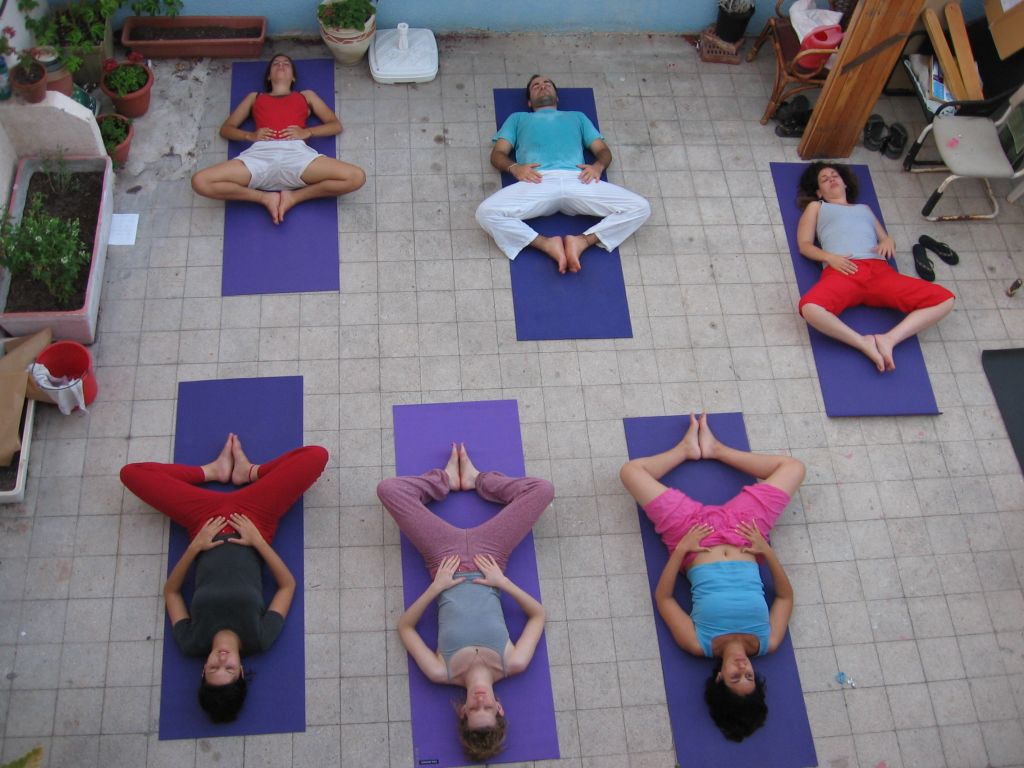
Do you tend to give to others a lot? Do you awake to feed the kids, walk the dog, or go to work? Is your day filled with answering questions, playing chauffeur, or serving others? Do you come home to clean the house, cook dinner, or help with homework? When you do take time for just you? If you're struggling to find time for yourself, here are some thoughts.
As soon as you unroll your mat (at home or in class), designate that time as "Just For Me Time". When you are on an airplane the flight attendant instructs you to put the air mask on yourself first, then help others. This is some of the best advise I've ever heard.
Your have to take care of yourself in order to care for others. It's that simple.
Yoga is a time for you and no one else. It's a time to rejuvenate and nourish your body, mind, and spirit. Once your cup is full, you'll have something to give. You can't give what you don't have.
If you don't feel comfort, joy, and happiness, how can you inspire that in others?
It's not selfish or demanding to have your practice all about you. In the end, that's the only way to offer to others. At the end of a practice, dedicate the positive feelings to someone in need. Sometimes that someone is you.
Love Much,
Kris
http://www.totalhealthyoga.com/
http://www.learnyogaonline.blogspot.com/
Today is the first day of the rest of your life!
Kris
http://www.totalhealthyoga.com/
http://www.learnyogaonline.blogspot.com/
Today is the first day of the rest of your life!
Thursday, September 13, 2007
Sciatica - Yoga Therapy
 Have you ever experienced "a deep, severe pain that starts low on one side of the back and then shoots down the buttock and the leg with certain movements"? If so, according to http://www.emedicinehealth.com/, you might have sciatica. Any time you have deep pain, it is best to seek medical advise from your doctor. Please, use the information here as an aide and not as medical advise--which I'm not qualified to give.
With that said, if you have sciatica, the following exercises may bring you relief. Remember the cause of your pain will influence the helpfulness of these movements. Your doctor or therapist may be able to pin point the root of the problem. Dr. Jean-Jacques Abitbol, orthopaedic surgeon and founder of the California Spine Group, says that the six leading causes of sciatica are a bulging/herniated disc, lumbar spinal stenosis, spondylolisthesis, trauma, piriformis syndrome, and tumors. So, you can see why it's important to have a diagnosis made.
In the case of piriformis syndrome, the exercises below will have the most success (as always check with your doctor first):
Beneficial Asanas
Supine Hand to Big Toe Pose - Supta Hasta Padangusthasana
Supine Hand to Big Toe Pose, but this time cross the top leg just past your midline. Root down through the outer hip crease at the same time.
King Pigeon - Rajakapotasana while leaning forward. Be sure to align the sacrum, that is do not allow one hip to fall lower than the other.
Half Lord of the Fishes - Ardha Matsyendrasana
Cow - Gomukhasana
Asanas to be Careful with
Be sure that all forward bends come from the hip crease and the pelvic bowl tips forward.
Enjoy the healing and exploring!
Kris
http://www.totalhealthyoga.com/
http://www.learnyogaonline.blogspot.com/
Today is the first day of the rest of your life!
Wednesday, September 12, 2007
Migraine - How can Yoga help?
A number of therapeutic issues have come up in the last week, so we'll continue with a few more therapeutic posts in hopes of helping more folks find comfort in their bodies.
One of the joys of Hatha Yoga is to find great health in the body, which not only feels great, but also allow one to experience their more subtle energetic and spiritual bodies.
A severe migraine attack leaves little room for much else. I had a friend that came to visit and ended up having to spend over 24 hours locked away in a dark room until her pain passed.
Understanding the Migraine Headache
The Mayo Clinic says that "some researchers think migraines may be caused by functional changes in the trigeminal nerve system, a major pain pathway in your nervous system, and by imbalances in brain chemicals, including serotonin, which plays a regulatory role for pain messages going through this pathway." When the serotonin levels dip, the trigeminal nerve releases neuropeptides. These neuropeptides cause the blood vessels in the meninges (outer layer of the brain) to swell. This brings on a headache or migraine.
The trigeminal nerve is the largest of the cranial nerves. It originates at the brain stem and branches into three nerves. One of these is the mandibular nerve, which branches even further. The interesting part is that it innervates various areas such as the tongue, inner cheek, teeth, gums, lower lip, and chin. With this knowledge, it seems that dental issues, including TMJ, could aggravate migraines. So, alignment of the jaw and release of the tongue will be used in therapy.
Serotonin is sometimes called the "happiness drug", because it impacts your mood. Low levels can be felt as sadness or depression. Stress can lower the amount of serotonin in your body.
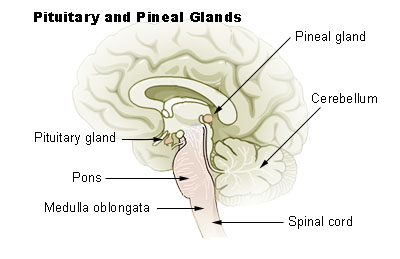
Your body produces this chemical in the pineal gland, which is known as the third eye by Yogis. This is why meditation on the third eye, or mid-brain, is useful in therapy.
Therapy for Migraine Headaches
Love Much,
Kris
http://www.totalhealthyoga.com/
http://www.learnyogaonline.blogspot.com/
Today is the first day of the rest of your life!
*******************************
I AM NOT A MEDICAL DOCTOR. THESE SUGGESTIONS ARE NOT TO REPLACE MEDICAL CARE.
One of the joys of Hatha Yoga is to find great health in the body, which not only feels great, but also allow one to experience their more subtle energetic and spiritual bodies.
A severe migraine attack leaves little room for much else. I had a friend that came to visit and ended up having to spend over 24 hours locked away in a dark room until her pain passed.
Understanding the Migraine Headache
The Mayo Clinic says that "some researchers think migraines may be caused by functional changes in the trigeminal nerve system, a major pain pathway in your nervous system, and by imbalances in brain chemicals, including serotonin, which plays a regulatory role for pain messages going through this pathway." When the serotonin levels dip, the trigeminal nerve releases neuropeptides. These neuropeptides cause the blood vessels in the meninges (outer layer of the brain) to swell. This brings on a headache or migraine.
The trigeminal nerve is the largest of the cranial nerves. It originates at the brain stem and branches into three nerves. One of these is the mandibular nerve, which branches even further. The interesting part is that it innervates various areas such as the tongue, inner cheek, teeth, gums, lower lip, and chin. With this knowledge, it seems that dental issues, including TMJ, could aggravate migraines. So, alignment of the jaw and release of the tongue will be used in therapy.
Serotonin is sometimes called the "happiness drug", because it impacts your mood. Low levels can be felt as sadness or depression. Stress can lower the amount of serotonin in your body.
Your body produces this chemical in the pineal gland, which is known as the third eye by Yogis. This is why meditation on the third eye, or mid-brain, is useful in therapy.
Therapy for Migraine Headaches
Mountain (Tadasana) - Stand with parallel feet separated and directly below your hip joint. Lean slightly forward, back, and then side to side. Find the spot where the weight is balanced and hovering just in front of the heels. The sternum lifts up gently as the shoulder blades melt down the back. Drop the chin down and then lift it up. Do this a few times and then stay at the spot where the weight of your head feels the most held by the body. That is, align when the front and back neck muscles are the most balanced. Usually this brings the chin slightly down from parallel with the ground. Maintain the angle of the head as you slide it forward and then back. Again, find the center point. For most people, this will align the ears with the shoulders. Keep that, as you glide your head to the right then left. Find the center. So, now you have reached balance up/down, front/back, and left/right. The teeth are parted and the tongue rests at the bottom of the mouth. Soften your gaze and imagine a cool wash cloth being placed on the skin of your face--all the way to the ears. Relax as the breath slows and deepens. Stay for 6-9 breaths.
Downward Facing Dog (Adho Mukha Svanasana) - Place the head on a block to make it more restorative, and stay in the pose for 1-3 minutes.
Shoulderstand (Sarvangasana) - Find a 1:1 ratio of inhales and exhales. Hold at least 6 breaths. If you're comfortable, you can take plow or remain in shoulderstand for up to 21 breaths. (Note: Only do this pose after the body has been warmed up.)
Legs on Wall Pose (Viparita Karani) - Use this mainly as a preventative, to stimulate the pineal gland. If the migraine is already in full swing, this pose brings even more blood into the head, which can increase pain. Bring focus to softening all facial features, and allow the tongue to slip down and back in the mouth. Teeth remain gently parted. Remain in the pose for 8-20 minutes.
Pranayama to reduce stress - Take a comfortable seat and close your eyes. Notice the breath without judgement. Count silently and become aware of the length of your inhales and exhales. Lengthen the shorter breath until both inhale and exhale are of the same length. Only do this as long as there is NO strain at all. Remain at the 1:1 breath for 10 breaths. Gradually, lengthen the exhales until they are twice as long as the inhales. This is a 1:2 breath. Again, remain for 10 breaths. This is a great way to prepare for meditation.
Meditation on the 3d eye - Sit in a comfortable position and breath normally. As you close your eyes, notice the 2 lines of breath coming into the left and right nostrils. Keep the lines separate for a minute or two. Then visualize the lines meeting at the mid-brain--a few inches inside from the point between your eyebrows. Each inhale see the lines of breath joining at the 3d eye (mid-brain). Each exhale see them move apart a few inches beyond the nostrils. Continue in this manner for a few minutes. Eventually, keep all focus at the mid-brain. Imagine a spaciousness growing in this area -- like a radiating light. Stay here for as long as you are able (working up to 10-20 minutes).
Love Much,
Kris
http://www.totalhealthyoga.com/
http://www.learnyogaonline.blogspot.com/
Today is the first day of the rest of your life!
*******************************
I AM NOT A MEDICAL DOCTOR. THESE SUGGESTIONS ARE NOT TO REPLACE MEDICAL CARE.
Tuesday, September 11, 2007
9/11
In 9/11 remembrance, a turning to good deeds
Christian Science Monitor has a great article about using 9/11 for doing more "good" in the world. I have always felt that in hard times, the focus ought to be on finding the silver lining. This keeps us from living in fear, anger, or sadness. So, take a moment and read the article. Find that silver lining--it's always there.
Love Much,
Kris
http://www.totalhealthyoga.com/
http://www.learnyogaonline.blogspot.com/
Today is the first day of the rest of your life!
Monday, September 10, 2007
Lower Back Pain

Low back pain can be caused from a number of physical or emotional reasons, such as an imbalance between hamstring and quadriceps flexibility, an imbalance between abdominal and back strength, fears about money, guilt, or love.
For serious back pain, see your doctor for recommendations and diagnosis. For mild back pain, try the simple (beneficial) asanas first. Wait 24 hours and see how your body feels. Frequently, you won’t know if your body was ready for a movement until the next day. When your back feels comfortable with the ‘beneficial’ asanas, then you may move onto the ‘okay’, then the ‘be careful with’ asanas. Whenever trying a new asana, only go to 50% of your maximum until the healing process moves farther along.
Above all, honor, listen to, and follow your intuition. The most important lessons will come from breathing fully and listening to your body.
These are guidelines only and do not consider special cases or past injuries. Check with your doctor or therapist prior to starting new exercise programs.
Beneficial Asanas
Cat/Dog (careful in Dog to not sway the lower back towards the ground). Start on all fours in a Table top position. Exhale as you round the back. Drop the tailbone and crown of the head down. Inhale and arch the spine downward as you look forward and lift the sit bones.
Balancing Table. From all fours, extend the opposite hand and leg straight forward and back. Do this a few times on each side.
Bridge (Setu Bandha Sarvangasana)
Supine hand-to-big toe pose (Supta Hasta Padangusthasana). To do this, lay on your back. Bring one leg up toward the ceiling. The other leg stays on the ground. Use a strap to reach your top foot or hold on behind the thigh. You can also do this in a doorway and rest the upper leg on the wall and the other leg goes through the doorway. Keep both thighs moving back. Take at least 9-12 long full breaths before switching sides.
Supine hand-to-big toe pose (Supta Hasta Padangusthasana). To do this, lay on your back. Bring one leg up toward the ceiling. The other leg stays on the ground. Use a strap to reach your top foot or hold on behind the thigh. You can also do this in a doorway and rest the upper leg on the wall and the other leg goes through the doorway. Keep both thighs moving back. Take at least 9-12 long full breaths before switching sides.
Supine child (Supta Balasana). Lay on your back and hug the knees into your chest. Release the low back.
Corpse (Savasana). Lay on your back, knees bent, and the calves and feet on a chair. Breathe deeply into the back and melt the muscles on every exhale
Okay Asanas
Supine and prone twists (if standing twists feel okay)
Locust (Salabhasana)
Widespread standing forward fold (Prasarita Padottanasana)
Sitting with support under the sitting bones
Asanas to be Careful with
Supported seating forward bends (keep towards the front of the sitting bones)
Asanas to Avoid
Aggressive seated forward bends
Love Much,
Kris
http://www.totalhealthyoga.com/
http://www.learnyogaonline.blogspot.com/
Today is the first day of the rest of your life!
Kris
http://www.totalhealthyoga.com/
http://www.learnyogaonline.blogspot.com/
Today is the first day of the rest of your life!
Subscribe to:
Posts (Atom)