Google Custom Search
Showing posts with label Philosophy. Show all posts

Monday, June 8, 2009

I CHOOSE LOVE

This is amazing! http://www.youtube.com/watch?v=AMOMgQCRAqM


Choose Love,

Kris
http://www.totalhealthyoga.com/

Today is the first day of the rest of your life!

Wednesday, June 3, 2009

Spiritual Beings

My son, Jake, just posted the following on Facebook:

"Man and god are one and the same. Man need only strip away the illusion of god as we see him now and see the truth. Man is not god.......god is man. - Jake Kramer(to the best of my knowledge)"

He's 14.

Love Much,

Kris
www.TotalHealthYoga.com

Today is the first day of the rest of your life!

Monday, June 1, 2009

Master Yoda


Is Yoda a Yogi?

Okay, so he's short, green and has three toes--not your typical yogi. I've yet to see him doing trikonasana (triangle) or suyra namaskar (sun salutation). However, his wisdom is profound and universal.


So what is a yogi? Just because someone practices asanas (hatha yoga postures) or teaches a yoga class does that make them a yogi? Krishnamacharya (the father of most yoga practiced today) said, "Anyone who claimed to be a yogi, wasn't." (pg. 23 Yoga and the Living Tradition of Krishnamacharya) Even though this great master, who only allowed the title "Professor" to be bestowed upon him, may not have called himself a yogi, those around him would say he was. Looking to his son, T. K. V. Desikachar for a definition of yogi we find the following: "[A yogi is] someone adept at yoga." (pg. 242 The Heart of Yoga)

Pantanjali laid out a concise definition of yoga 2000 years ago in the Yoga Sutras. "Yoga is the restriction of the whirls of consciousness." (pg 215 The Yoga Tradition) So to be precise, perhaps no one alive today is truly a yogi. But Yoda does move entire ships with shear concentration and oneness with his surroundings. That's gotta count for something!

Additionally, notice some of the wise words that this sage brings us and the correlations to yoga wisdom:

"Try not. Do or do not, there is no try." (Simply "do your work in the peace of yoga, free from selfish desires, not moved by success or failure." pg 223 The Bhagavad Gita in Yoga Masters)

"Fear is the path to the dark side. Fear leads to anger. Anger leads to hate. Hate leads to suffering.” (Fear stems from thoughts of loss--loss of materials, relationships, respect, or life itself. To see that we are not our things, relationships, attitudes, or even our physical bodies is part of the self-actualization that yoga brings. When we know this, fear disappears.)

“Death is a natural part of life. Rejoice for those around you who transform into the Force. Mourn them do not. Miss them do not. Attachment leads to jealously. The shadow of greed, that is.” (We practice savasana -- corpse -- at the conclusion of almost every class to remind us that death is part of life. To bring us back to Source and temporarily release the physical body.)

“Named must your fear be before banish it you can.” (Svadhayaya, self-study, is one of the attitudes Pantanjali cites as part of the practice of yoga.)

"Energy surrounds us and binds us. Luminous beings are we, not this crude matter. You must feel the Force around you; here, between you, me, the tree, the rock, everywhere, yes. Even between the land and the ship." (Samadhi--the highlight of meditation--is to merge with an object.)

"[Luke:] I can’t believe it. [Yoda:] That is why you fail." ("The mind controls the body." pg 44 Japanese Yoga)

"Feel the force!" ("We are one with the universe, we are therefore imbued with the energy of the universe..." pg 27 Japanese Yoga)


So what do you think? Is Yoda a yogi?


Kris
http://www.totalhealthyoga.com/

Today is the first day of the rest of your life!

Thursday, April 9, 2009

What Is Success

What constitutes a successful life? Society, parents, peers, and perhaps even our own minds frequently use the term 'success' synonymously with financial wealth, living in upscale neighborhoods, driving expensive cars, and holding certain jobs. I believe this idea hinders us in the path of true success.


This brings us to the question, then what is success? When we are stuck in the thinking mind, it is helpful to first still this inner chatter and preconceived ideas through yoga, meditation, or even a walk in the woods. So to determine what success meant to me personally, I took a long savasana (deep relaxation) after a hatha yoga practice and cleared my mind. Then I pulled out a journal and just wrote whatever came to me regarding the subject of success. This technique is a great way to let your inspiration and insight come through on any topic.


The result of this free-form idea gathering combined with some word changes brought out the following in acronym:


Success
S - Silence
U - Unite
C - Creativity
C - Character
E - Excel
S - Solutions
S - Surrender


Silence: Take time to be in stillness and silence. This is were our inspiration and insights bubble up.


Unite: Unite your intentions and actions. First you must know what your intentions both globally, locally, long-term, and short-term are. Coming to a place of silence helps to set these intentions without ego getting in the way. Then observe your actions; do they align with your intentions?


Creativity: Don't be a cookie-cutout; be your own person with your own unique contributions to the world. Honor what works for you and remember that we each have an individual purpose or dharma. Be true to yourself and allow others to be true for themselves. (Yes, moms -- including myself -- this is really important for us to remember!)


Character: Act and live with character. Thomas Lickona has written a wonderful book -- if you can get past the preaching and strictness of it -- called Character Matters. Do you live, speak, think, and act with integrity, honesty, respect, honor, and gratitude? These words mean different things to different people. What do they mean to you? Do you find that you treat others with respect or honor, but not yourself?


Excel: Do your best. I hesitate to use the word "best" as you could do your "best" at work by never coming home. You could run a race and pass out from attempting to reach higher performance continuously. Sounds exhausting, right? Instead view "best" with the wise advice of the Chinese, "Do everything 70% of your maximum. Run 70% of your fastest. Eat 70% of what you can." The guideline isn't 30% or even 50%. So put forth effort without killing yourself or stressing out beyond your limits.


Solutions: Focus on solutions, not problems. It's wise to bring awareness to potential obstacles or challenges. But to stop there is where we may fail. To succeed, we must look at these issues and brainstorm for solutions. Free-form all ideas with wild abandon; you can always go back and remove ideas that you know won't work. But when we brainstorm in a a free format (no judgement) some pearls of insight just might surface.


Surrender: The Bhagavad Gita councils us to do our dharma (purpose) and then let the outcome go. When we act with integrity, awareness, and wisdom, that is enough. That is success. The result of our actions are none of our business. I've heard it said, "There's your business, other people's business, and God's business." The outcome of your actions pure of heart are God's business, not ours.


"Success is not so much what we have as it is what we are." ~ Jim Rohn


"Truth, self control, asceticism, generosity, non-injury, constancy in virtue — these are the means of success, not caste or family." ~ Mahabharata


Love Much,

Kris
http://www.totalhealthyoga.com/

Today is the first day of the rest of your life!

Tuesday, February 10, 2009

Don't Worry, BE Happy!

Mark Twain (complements of Wikipedia.com)


Mark Twain once wrote, "I’ve been through some terrible things in my life, some of which actually happened." This profound and witty point is well taken. Others have shared the same sediment, such as Bobby McFerrin in his upbeat tune with a message, "Don't Worry, Be Happy!" And, "Worry is a prayer for what you don't want," says Kris Carr, author of Crazy Sexy Cancer Tips.
Now let's be careful with the word "happy." Happiness as the opposite of sadness is not what I'm talking about. That type of happiness is fleeting and ever changing. Don't worry, be happy is not about acting happy or pretending to feel happy; it's true inner contentment or bliss. The yoga sutras describe this in the yogic attitudes or niyamas as samtosa which best translates as a state of contentment. I would add a state of acceptance of what is. If we don't want was is to continue, that's cool; we can act and think in such a manner at to change it. But step one is a peaceful recognition of the present moment and state of affairs.
"Great," you might say, "but how do I get there?" Reaching a state of inner calm amongst potential chaos starts with understanding that real lasting joy has no opposite. As the Buddhists and Hindus describe, it is like the center of a wheel. Generic happiness, sadness, anger, enjoyment are on the outer edges of the spokes; whereas bliss, real happiness, samadhi, acceptance, and inner peace are at the center. All the emotions spin around on the periphery, but that tranquil knowing is at the core.
There are no words that fully describe this state; sure words can point to it or attempt to illustrate what pure unadulterated happiness is. But it's an experience that is beyond language and the thinking mind. Most of us have at least had glimpses of inner bliss. Musicians may sense this state of being while playing, an artist while creating, or an athlete while running. Nature is always in this truly present state. You may have felt it when watching the sunset or perhaps when standing in an open meadow filled with grasses and flowers swaying with the breeze. A moment when your thinking mind pauses; there is no analysis or labeling. There is simply being. This is true happiness. And what's awesome is that with practice you can connect to it at any time.
So stop worrying about tomorrow, or yesterday for that matter. And start being with those around you--no labeling and no thoughts of how things "ought to be different." Then you'll see what I mean; happiness--real happiness--cannot be bound by words; it's too limitless for that. And when you stand in the center of joy, you know--really know--that everything is okay just the way it is.


Love Much,

Kris
http://www.totalhealthyoga.com/

Today is the first day of the rest of your life!

Monday, February 2, 2009

The Guru is YOU!

About a year and a half ago, I posted on the subject of gurus - http://totalhealthyoga.blogspot.com/2007/09/are-you-my-guru.html. Here again I'd like to share a few thoughts on the subject.

Contemporary spiritual leaders such as Eckhart Tolle, Byron Katie, and Wayne Dyer claim to not want to be anyone's guru. Dyer points out that if something he says inspires you or guides you to a deeper knowing, it's not his doing. It's your readiness and openness that sheds more light. He takes no credit for any progress you make; nor does he take blame for your blocks.

In the past I thought that anyone who brought light and understanding where there used to be darkness or confusion was a guru, but I'm beginning to see that the only one that can truly dispel suffering and bring joy is each one of us for ourselves. As Jesus said, "The kingdom of Heaven is within."

There is a Zen saying: "If you meet the Buddha on the road, kill him!" The idea here is that Buddha is not something or someone outside of you. Buddha can only be found within, so something outside of you must be an impostor.

Another wise man, Lama Surya Das wrote, "We can always learn from others, but finally each of us can only trust our own intuitive heart." This is important, especially as students of yoga. Even alignment that is perfect for one person, may not suit another. We each have to decide for ourselves what is best--what is true for us. This takes courage, discipline, and trust in who we are.

Finally, some words from Byron Katie, "You can't free yourself by finding a so-called 'enlightened' state outside your own mind. When you question what you believe, you eventually come to see you're the enlightenment you've been seeking." Like Dorthy in the Wizard of Oz, the answers are already within you. How cool is that?

Love Much,

Kris
www.TotalHealthYoga.com

Today is the first day of the rest of your life!

Thursday, October 2, 2008

Compassion - Can You Care Too Much?


A dear friend came to me the other day upset after a visit to the doctor's office. It seems that yet another ailment has reared its head. Her list of serious illnesses continues to grow and even her doc's think stress has a lot to do with it. Lori (not her real name) has difficulties with her family. Lori is a giver. It's that simple. The other day I went to visit her and told her I'd bring lunch--the idea being she'd have to do nothing. I even brought plates and silverware, so she'd have no dishes. By the time I arrived, she had more food already on the table than a small army could finish. Well, maybe not that much, but way more than we could tackle!

Oddly, she knows that all of this giving is bringing on countless health problems. Members of her family flock around her--even her mother--in part, I think, because Lori is just so easy to be around and does so much for others. Like an alcoholic with liver disease who takes another drink, Lori just can't stop giving of herself. She gives and gives until there's nothing left, and then she gives some more.

When I suggested she stop doing so much for others, she voiced concern. "How can I stop doing so much and still be a compassionate person?"

Does compassion imply giving what you no longer have to others? Is it compassionate to injure yourself for another's sake? Are you really helping that other person?

Since her family acts like energy vampires hoovering around her and demanding everything she has, I question if Lori can learn to give less in such an environment. Over the last 40 years, it's only gotten worse, not better. Sort of like a drug addict trying to heal while staying in a drug house.

My suggestion was to separate from these draining relationships until she felt stronger and healthier. Then with awareness of how much to give, slowly re-enter these people into her life. However, it's challenging (if not impossible) to tell your mother, kids, spouse, and sisters that you're taking a break from them all!

I don't claim to have the answer; maybe there's a different answer for each of us. But it does make sense to me that to be compassionate means to honestly look at what is best for all involved--including yourself! Once you have learned what you can about yourself and done what you can for the other person, if the situation remains draining and unhealthy, it's time to end it--maybe not forever, but for now. End it with love and compassion in your heart, but end it. I do believe this is the most caring act -- tough love.


Kris
http://www.totalhealthyoga.com/

Today is the first day of the rest of your life!

Monday, September 22, 2008

Spiritual Growth - The private relationship between you and God


GOD: Now there's a loaded word! If you want to see an argument break loss bring up religion or politics.
My relationship with this label has had its ups and downs over the years, but in the end it's just a word. Stick in any combination of sounds that works for you, be that Universal Consciousness, Higher Self, Jesus, Buddha, etc. What's important is NOT what you call it; rather that you understand that I'm referring to the part of you that is within and beyond--a calm and peaceful place void of ego. This is what I'll call Spiritual Source--I could just as well call it Buga-Buga, but to avoid too much silliness, we'll stick with Spiritual Source.
Dr. Douglas Brooks shared a story about three years ago at a yoga teacher training in Massachusetts saying that his teacher "never shared his spiritual beliefs with his family. Not even his wife." Yet, this master spoke of his private practices with Dr. Brooks. This is because Douglas asked. The Indian culture was set up in such a way that
one's spiritual life was private but not secret.
This concept aligned deeply within me. As soon as one is off yakking about their beliefs to others the ego (or attachment) gets involved, and in a severe case people are attempting to shove their beliefs onto others. Did you ever have someone ring your doorbell over dinner to tell you about "their God?" Oh, pleeeeease! These are total strangers invading someone's home-time to push ideas. Tell me that's not ego driven.
As a teacher of yoga, which is by definition a spiritual practice, it is the teacher's responsibility to guide others spirituality. This is not to be confused with religion--the rituals and traditions. This is about helping others to experience for themselves what Spiritual Source is for them. In a class or in the student-teacher relationship, this is part of the agreement. However, this does not give the yoga teacher license to even attempt to guide those that do not want guidance. It took me almost seven years to understand that when I tried to help my sister with issues by providing my outlook on Life, I only drove her farther away; she hadn't asked for spiritual guidance, she had only wanted a listening ear.
Dr. Wayne Dyer, one of America's great spiritual leaders today, reminds us again and again to stay private and keep your relationship with Spiritual Source sacred and just within your own heart. I've never quite gotten this, until last Friday. Why not share your profound inspirations with a close loved one? I'm not talking about knocking on doors and telling my neighbors--who quite frankly could care less. I'm talking about expressing the excitement of spiritual growth with your most intimate partner.
Well, I did this last week and awoke the next day in doubt--the thinking mind had stepped in. I believe this is why Dr. Dyer advises so strongly to keep your personal spiritual path just that--personal. No words can accurately describe the spiritual realm. Language can point to it, but not fully explain it. So the simple act of attempting to describe a remarkable spiritual experience, is always lacking. Also, one must consider the reaction of the other person. It's like telling someone the name you've chosen for a baby while still pregnant. If the reaction is hesitant or someone tells you why/how they hate that name, then it mars the joy of using that particular name. When I attempted to describe my spiritual life and shifts in it to my partner, the thinking mind slipped in and took hold. This is in part due to simply using words for something that words can not be truly used for and in part due to a conversation that ensued regarding where inspirations come from and what the results mean. Suddenly the peaceful surrender that I had been experiencing was replaced with worry, doubt, and "trying" to figure it out.
Admittedly, a stronger person may be able to share how the universe works through them and how sometimes the most perfect actions or words just appear, but this was not the case for me. For now I will focus on returning to that place of peace and hold my tongue until the desire to share stems only from knowing it is the right time and not from anxiousness or excitement.
Love Much,

Kris
http://www.totalhealthyoga.com/

Today is the first day of the rest of your life!
Tuesday, September 2, 2008

Spiritual Seekers

Do you find yourself looking for answers or simply looking? I've been a "seeker" for many years and quite frankly, I'm getting a little tired of it. Maybe it's simply a case of sheer laziness, but I like to think it's a glimmer of enlightenment.

People frequently get "stuck" in search mode. It's like googling for the word "house" and the search engine hangs. Being that google never "just keeps going" and gets stuck in the questing of a subject or word, does that make it smarter than us self-proclaimed "seekers?" Now there's a scary thought!

I met a gal, let's call her Mary, at a Yoga class two years ago. Mary was a bit put-off by any advice or spiritual suggestions. "I've been questing for so long, I'm just worn out and need a break," she lamented.

This sounds like progress. No, really, it does. Think about it, when we're constantly looking outside ourselves for answers and meaning with the mind, the heart (the soul) can be easily forgotten. Ironic but true.

Two options exist, as far as I can see:

1. Keep reading and looking for meaning or understanding while allowing your mind to take over and risk getting lost in the search.
2. Pause and listen to your breath. Stop long enough to hear or feel your heart beating and the blood circulating. Observe. Be present. From this place, and only from this place, read and observe new ideas.

Do you see the difference? Option 1, you are driven from a point of lack and trying to find meaning. This is a fine place to start, but over time we must move onto option 2. When you do, the mind is useful, but no longer controls the show. The heart does. A detachment begins to occur and when you run across something that is true for you, you will feel it inside as if a wave of peace has just washed over you.

To seek or not to seek? Tempting to say, "That is the question." Instead let me summarize with a quote from Dr. Wayne Dyer,


Love Much,

Kris
www.TotalHealthYoga.com

Today is the first day of the rest of your life!

Tuesday, August 12, 2008

3d Eye - not the music group

I wonder is the music group, Third Eye Blind, realizes that this is the state that many of us walk around in all the time--with a loss of connection to Higher Awareness.

In yoga, the third eye is referred to frequently in meditation as a means to encourage a connection with the Divine or Higher Awareness. The Bible says,


“When thine eye becomes single, the whole body fills with light.” ~ Matthew 6:22

In the yogic tradition, this "single eye" is the third eye, also known as the sixth chakra. When opened, you may have a deeper sense of knowing what is true--not because you read it or it makes sense, but you simply know in your heart. Inspiration and intuition stem from this energy center of the body. If you struggle with trusting yourself, work with asanas and meditations geared for this area.

Interestingly, balance poses are recommended to tap into the freedom and wisdom of the third eye. To be honest, I am not sure why. My best guess is that you have to be still and centered and trust in yourself in order to stand on one leg.

Be sure to add at least one balancing posture to your day and work with a teacher and great body awareness to level the hips somewhat while following a deep and steady breath. Allow the head to float skyward like a helium balloon. Enjoy the combination of rooting and "flying" at the same time.

Namaste,

Kris
www.TotalHealthYoga.com
www.TotalHealthYogaClasses.Blogspot.com

Today is the first day of the rest of your life!

Monday, August 11, 2008

Lotus Flower Symbol


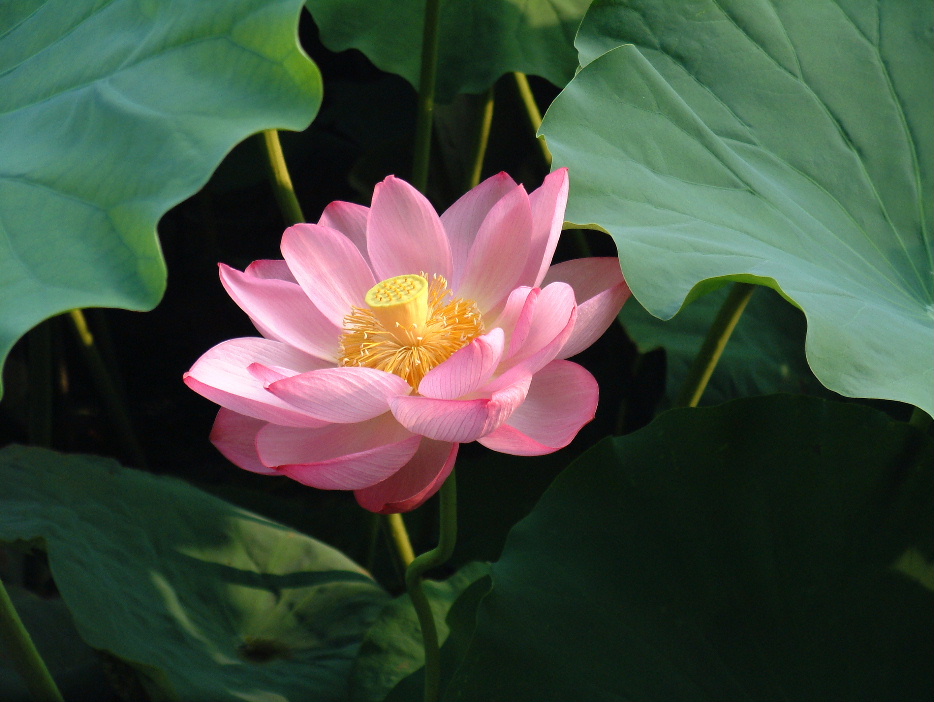
The beautiful strong, and yet delicate, lotus flower is the perfect analogy for our growth as human beings.

Life begins with the roots growing deep into the mud at the bottom of a pond. There is a density and heaviness, just like our material or physical world.

As we grow and experience life, our thoughts come alive vibrating at a higher frequency than the physical body. This is the water where the stem reaches towards the light above.

Finally, the flower opens above the water's surface basking in the light and freedom of the open air.

This is our spiritual journey. To begin with the physical, mental, and at last enlightenment. Here you come to know ease and spiritual truth--the least dense of these three realms.


Love Much,

Kris
http://www.totalhealthyoga.com/
http://www.totalhealthyogaclasses.blogspot.com/

Today is the first day of the rest of your life!

Wednesday, January 23, 2008

Moment of Truth

Tonight yet another reality television program launches into millions of peoples living rooms--if they choose to watch.

This one is called Moment of Truth and quite honestly I don't see why anyone could condone such a program. When did watching people ruin their lives and create sorrow for themselves and others become entertainment? I purposefully am not including a link to info on this "show" as they do not need more people checking it out.

However, I'm compelled to question the premise of it. People will come on and be hooked up to a lie detector and have to answer 21 questions honestly. Prior to the filming, the contestants' backgrounds are delved into. Family, co-workers, neighbors, and friends are investigated in attempt to find "juicy" questions to ask.

The questions (if answered honestly) cause pain and discomfort to people. For example, an obese woman asks if "obese people disgust you?" Remember, if it's asked that means that according to the pre-show research, the answer would be yes. To look at your spouse and say whether-or-not you sometimes think about being with someone else. The list goes on and on.

On the radio (WKLH - Milwaukee) this morning, I heard that this show was banned from a country after a woman confessed to hiring a hit man to take out her husband and still took home $25,000!

In Yoga the sutras site the importance of honesty (satha). However, they also (and before satha is mentioned) say to be kind (ahimsa).

I am a very honest person and am pretty strict about it while raising my children. But to use honesty as an excuse to humiliate and treat someone with such cruelty is ridiculous.

This is not entertainment! Airing this program promotes the human race moving in a backwards direction. So many people are learning to open their hearts and take responsibility for their lives. Why doesn't that make the television? Public TV does their best and offers wisdom of leaders such as Wayne Dyer or Christian Northrup.

It saddens me that watching people air their pain and bring it upon others is what sells commercial time. My hope is that one day soon, the public will cry out for programs that bring more love and compassion into their hearts. Not sorrow and grief.

Love Much,

Kris
www.TotalHealthYoga.com
www.TotalHealthYogaClasses.Blogspot.com

Today is the first day of the rest of your life!
Friday, December 21, 2007

Attachment and Love

The other day I posted something about our personal environment, such as in the home or workplace. In the post I confessed an attachment for our new kitchen.


Having practiced Buddhism a few years back, I'm well aware of the idea of attachment being a negative quality and the cause of much suffering. I mentioned this in Yoga class earlier this week and a wonderful student, MH, dropped my a note regarding attachment and enjoying life.


"I think you should enjoy and savor your new kitchen in a big way! Those things are fun and part of living this life with joy. I understand Buddhist attachment, but I have my own definition of attachment and it doesn't exclude emotion, or a few things I want to remain 'attached' to for awhile even if those things are not in my best interest."


I loved what she had to say! Sometimes I confuse really loving or enjoying someone or something as being "too" attached. As a mom, that's where I choose to remain attached. Maybe the real negative of attachment is when you believe that your true happiness only comes from these people or things. I know isn't true. So, yes, I will enjoy every moment in my new kitchen; thanks to this lovely lady for reminding me that there are many levels of attachment.

To further bring home the difference between attachment and loving your surroundings -- here's a comment that Laura left on the original post:

"Kris, I LOVE your new kitchen and I personally think it is wonderful that you love it too. Kiss that floor, baby! Detachment doesn't mean not loving and fully enjoying and embracing life and all that it has to offer (including the creature comforts of material things), it just means not to let them BE your happiness. Just let them feed it. Good for you!"


Thanks for ladies for the new viewpoint!
Love Much,

Kris
http://www.totalhealthyoga.com/
http://www.totalhealthyogaclasses.blogspot.com/

Today is the first day of the rest of your life!
Monday, December 3, 2007

Silence is Golden

A while back, Om Bites posted something about daily rituals. The post was inspired by Elizabeth Gilbert, the author of Eat Pray Love, who by the way will be on Oprah for her second time tomorrow (Dec 4, 2007).

Elizabeth talks about the importance of silence. At one point she's in an elevator with a television in it! How far do we have to go? For a while, grocery stores had TV's, restaurants have them, cars have them, and now even elevators! Are we afraid of what we might find in the silence?

“We need to find God, and he cannot be found in noise and restlessness. God is the friend of silence. See how nature - trees, flowers, grass- grows in silence; see the stars, the moon and the sun, how they move in silence... We need silence to be able to touch souls.” - Mother Teresa

“Silences make the real conversations between friends. Not the saying but the never needing to say is what counts.” - Margaret Lee Runbeck

“There are times when silence has the loudest voice” - Leroy Brownlow

“Silence is a source of great strength.” - Lao Tzu

"Experience teaches us that silence terrifies people the most." - Bob Dylan

"This silence, this moment, every moment, if it's genuinely inside you, brings what you need. There's nothing to believe. Only when I stopped believing in myself did I come into this beauty. Sit quietly, and listen for a voice that will say, 'Be more silent.' Die and be quiet. Quietness is the surest sign that you've died. Your old life was a frantic running from silence. Move outside the tangle of fear-thinking. Live in silence." - Rumi

Love Much,

Kris
http://www.totalhealthyoga.com/
http://www.totalhealthyogaclasses.blogspot.com/

Today is the first day of the rest of your life!

Monday, October 15, 2007

Dharma - Passion for Life

Dr. Joe Vitale recently entered a post about finding your passion. He suggests imagining that you have just won or been given tons of money. After any initial spending sprees, what do you do? This is your passion. The next step is finding out how to create a living doing this passion. What he calls 'profitable passion.'

What a great way to live life. To know what brings you joy and do it every day!

Periodically, I question myself and ask "What makes me want to get up in the morning excited to start the day?" If I can wake up every (or most) mornings and look forward to the day ahead, then I know that I'm following my dharma and living my passion.

In The Heart of Yoga, TKV Desikachar defines dharma as duty or ethical value. In Light on the Yoga Sutras of Patanjali, by BKS Iyengar, he describes dharma is the 'first of the four aims of life, science of duty, religious duty, virtue.' Sometimes Iyengar simply equates dharma to duty.

My favorite teacher on the subject of dharma is Aadil Palkhivala, founder of Purna Yoga. He has a brief YouTube regarding the subject. He talks about the importance of knowing yourself in order to know who to "be". Otherwise, we tend to attempt "being" someone that we are not.


"Dharma is the reason you are alive." - Aadil Palkhivala
Yoga is a tool to help you find and live your dharma.
Love Much,

Kris
http://www.totalhealthyoga.com/
http://www.learnyogaonline.blogspot.com/

Today is the first day of the rest of your life!

Wednesday, October 10, 2007

Ethics - What do you look for in a teacher?

I was just speaking with a friend regarding choices we make about who we select as our teacher(s). There are so many styles of Yoga and types of people teaching it. First you have to find a teacher that offers a type of Yoga that appeals to you. Then it's important to find someone who actually knows what they're doing.

This might sound crazy, but anyone can spend 2 days at a workshop and walk away with a sheet of paper calling them a "certified Yoga teacher." (While looking for a link to show you one of these pathetic offerings, I found worse. You can actually buy a Yoga certification. That's right, for just $49.99 you can buy "the ExpertRating Yoga Instructor Certification". Sounds like you pay money, they send you a manual, you take a written online test (based off the manual), and then your certificate is sent out.) With that said, I've had teachers with no certification and some with Yoga Alliance approved certification--requiring at least 200 hours of training in various subsets of Yoga, such as anatomy and philosophy. In many cases, the one with less formal training is better. All that training doesn't make you a great teacher, but hopefully you at least understand alignment and Yoga a little better. Again, I've found this is not always the case.

My friend currently attends a class with a very knowledgeable woman. We'll call her Mary. Mary has studied Iyengar Yoga with Iyengar and many of his senior teachers for 30 years. She leads a well-structured class and has a firm understanding of how to guide students. My friend feels safe in this class and appreciates how Mary is able to watch and ensure folks don't overextend themselves. Sounds great, right? The catch is that after class, Mary is a judgemental and mean person. This really bothers my friend and she's questioning whether-or-not to continue attending a class given by someone that she can't respect or like as a person. There is another teacher, in the Anusara style, that she can go to. This gal is very sweet and nice, but she keeps stressing the class to go a little further--take it deeper. I have heard this frequently in Anusara--constant encouragement to "take it to the next level." (A blog topic for another day.) My friend is concerned that she could easily get hurt in such a class.

Who does my friend go to? The meanie that actually knows how to teach or the kind woman that pushes too far?

I also struggle with this. There is a teacher that really knows his stuff. But he is pretentious and (in my opinion) looks down on many of his students. In many ways he wants to be treated as a guru (see my post on gurus and Doug Keller's post--much more profound than mine). When seated in class on the floor for even 3-4 hours, you are not to straighten your legs as he says it is disrespectful to point your feet at him. Lying down, even if your body aches from sitting so long, is out of the question. I honor his classroom and do as he requests. However, there are a number of things he says that tell me his ego is inflated like an oversized beach ball. Not the kind of guy I'd like to hang around with. The catch is, he has so much knowledge that can help me improve as a teacher and in my practice of Yoga. Ethically, I'm a bit torn as to whether-or-not I will study with him in 2008.

John Friend says and does a lot of things. Some of which I am strongly against and some of which I agree. He once said that after you've been practicing for a while, to stop and look at your life. Are you a more compassionate, understanding, kind, and loving person? Or are you self-centered, judgemental, uncaring, or cruel? If you find the latter to be true, then look at your practice. Alter and use your practice to help you become more compassionate and caring in your life. This is good stuff. And that is where my question comes in.

If these teachers truly understand Yoga and practice it in a heartful way, then why are their egos so big and their judgements so quick? Is it best to only learn from a teacher that emanates compassion and love? What if you do not respect their way of life? Is it important, or even necessary, to respect or admire how they live their life, or does it not matter once the mats are rolled up and put away? Is it wisest to turn a blind eye to that person outside of class while still honoring, respecting, and learning from the knowledge they have acquired during class? If we ignore the teachers that don't suit us on a personal or ethical level, are we 'throwing out the baby with the bathwater?'

More questions than answers today.
Any insights are much appreciated.

Kris
www.TotalHealthYoga.com
www.LearnYogaOnline.Blogspot.com

Today is the first day of the rest of your life!

Friday, October 5, 2007

Sanskrit - OM - Shanti - Namaste

Q: What are the Sanskrit words that we use at the end of every class?


A: At the end of my classes (and many others) there are 3 words used:

OM
Shanti
Namaste

Shanti means peace. It is pronounced as it looks with the 'a' being like the 'a' in 'father'. The 'i' sounds like the 'e' in 'he'.

Namaste has a few translations meaning pretty much the same thing--I honor and bow to the divine spark in you, which is also in me. The first two 'a's are like the 'a' in 'father'. The 'ste' sounds like 'stay' with a softer 't' sound.

OM is a bigger subject. It is an ancient sound. Physics tells us that everything is actually a vibration. OM is the vibration of all things. When we chant this sound in unison, it brings the energy of the groups together. We can feel the vibrations inside our body, helping our inner awareness to grow.

The translation of OM is AUM.

A: First letter in the Sanskrit alphabet
Creation, birth, beginning
Wakeful state

U: In the middle of the Sanskrit alphabet
Sustaining, life, middle
Dream state

M: The last letter of the Sanskrit alphabet
Dissolution, death, end
Dreamless state

Finally, there is silence as the vibrations wash over you. This silence represents returning to the source. A state of samadhi or nirvana.


Love Much,

Kris
http://www.totalhealthyoga.com/
http://www.learnyogaonline.blogspot.com/

Today is the first day of the rest of your life!

Wednesday, September 26, 2007

Are You My Guru?


I absolutely loved this book as a kid. It was fun and I liked that the bird found his mother in the end. (Hope I didn't spoil that for anyone!)

However, I question the number of Yogis I see searching for a guru to "tell them what to do."

I've never been to India and am not an expert of the subject of having or being a Guru. For the use of this post, I'm talking about a Guru not only as one who brings light where there was darkness, but as a knower of all things--including what's the best path for his/her students. Perhaps, there are such Masters in the caves of the Himalayas, but there are a number of international Yogis posing as Gurus--or at least their students have put them on this type of pedestal. My question is, is this such a great idea?

As a student, I find there is a fine line between showing respect for a teacher and following them blindly. Unfortunately, some of the most well-known and "followed" teachers have created a bit of a cult. They're not asking people to donate all their money--well, not directly anyway. But there is a mentality that they can cure anything and if you, the student, would just understand and obey (uh, I mean listen to) what they say, then everything would be fine and dandy. Heck, some even promise samadhi or enlightenment. Others say their alignment, and no one else's, is right for you.

What troubles me most, is how many people take to this. Is it the need for a strong parent figure in their lives? Is it the fear of making their own choices? Is it a lack of self-confidence?

As a teacher, I tend to back away when a student looks to me for all the answers. If you're looking for a Guru, I'm not it. Handling my own life is enough. I'm happy to share, guide, love, and accept you. But I'm not prepared to tell you what is right for you. Quite frankly, because I don't know.

In my opinion, a great teacher and true Guru helps students to see the beautiful person that they already are. A true Guru guides, but never insists. A true Guru suggests, but honors the student's right to decide. A true Guru, accepts the student as a person, even when they disagree. A true Guru, offers their opinion and encourages students to share their thoughts as well.

Remember, Svadhayaya or Self-study is the 4th Niyama from the Yoga Sutras.
No matter what path you take for Self-realization, in the end you have to go it alone in order to see that we're all one.
Then, you will realize that you were never truly alone.


Love Much,

Kris
http://www.totalhealthyoga.com/
http://www.learnyogaonline.blogspot.com/

Today is the first day of the rest of your life!

Wednesday, September 19, 2007

History of Yoga


Being a student of Hatha Yoga for many years now, I figured it was time I read the Hatha Yoga Pradipika. Whenever I'm at a workshop and the teacher mentions something from this text, I sit quietly feeling a bit guilty for not having read it.
So, finally I decided to get Brian Akers translation and see what it was all about. The Pradipika was written in the 1400's and the title means to shed light on the subject of Hatha Yoga.
The first chapter covers Asanas. There are 15 of them--none of them standing. It seems to me that in this day and age of cars, chairs, telephones, and TVs, Yoga had to add many other postures, including standing ones, so that people could comfortably do some of the postures in the Pradipika. Even simply sitting on the floor for any length of time requires flexibility, especially in the back body. I wonder how many people in the 1400's had back problems?
Chapter two is on Pranayama, which is recommended to only begin after mastering Asana. Even today there are teachers that say you need to wait to start Pranayama and others that talk about it the first day of class. I think the confusion has to do with what you define at Pranayama. Noticing your breath's qualities and length and using some Ujjayi breathing are quite innocent and (in my opinion) worthy of learning early on in a practice. Adding in the bandhas with full breath retention takes more finesse and awareness. Asanas is a great way to attain the subtle awareness needed for proper Pranayama.
Next is chapter three on Mudras. To be honest, when I think of Mudras, I think of Hand Mudras. The Pradipika talks more about full body Mudras. There are some useful tips for Mahamudra--a more advanced technique. Such as placing the "the tongue on the front teeth....This obstructs the upward motion of all the nadis."
I really had to let a lot slide, especially in this chapter. For example:
"As a beautiful and charming woman without a man, so Mahamudra and Mahabandha are pointless without Mahavedha." [Pointless without a man? Women's lib must not have been around.]
"Turn the tongue backward and insert it into the skull cavity." [Ah, so that's how to scratch the inside of the brain!]
"Gradually elongate the tongue by cutting, shaking, and stretching it until it touches the middle of the brows." [Did people really do this stuff??]
"Mix the lunar nectar released by this practice with cow-dung ashes and smear one's important parts. Divine insight is born." [Do not try this at home!!]
The forth, and final chapter, addresses Samadhi or merging with a single object. I found it to be a relatively esoteric description of how to meditate. There are some ideas on where and how to place the inner gaze. Being a practical gal, I would select a more modern day book on meditation if I was looking for guidance. Better yet, I'd find a teacher.
In summary, I can now listen to teachers reference one of the first books (if not the very first) on Hatha Yoga without feeling bouts of guilt. I'm glad I read it. I feel more well-rounded and a little more knowledgeable in the history of Yoga. I wouldn't recommend it for a beginner in Hatha Yoga--or the smearing of the cow dung might make them run for the hills!
I promise you can effectively practice Hatha Yoga without having to cut your tongue or find a good man.
Love Much,

Kris
http://www.totalhealthyoga.com/
http://www.learnyogaonline.blogspot.com/

Today is the first day of the rest of your life!

Friday, August 24, 2007

God - Connecting with God through Meditation

"We need to find God, and he cannot be found in noise and restlessness. God is the friend of silence. See how nature - trees, flowers, grass- grows in silence; see the stars, the moon and the sun, how they move in silence... We need silence to be able to touch souls."- Mother Teresa

A wise student once shared with the class "to listen to what I mean, not what I say." This stemmed from a conversation about the use of a term to describe the force behind our thoughts, the energy that is only felt yet not seen, the presence that brings with it peace and true happiness. Some call this God or Jesus. Others like Buddha, Allah, or Krishna. The list doesn't stop here. You might have heard Mother Earth, Higher Consciousness, Self (with a capitol "S"), Divine Nature, or Source. The terminology is truly endless.

For years, I had trouble with the word "God". It's a long story for perhaps another time. The point is, as I withdrew from this word so strongly, I missed some very valuable lessons from some great masters. I was hung up on the word and forgot the broader meaning that can be applied to it. Thanks to some wise friends and great authors, I can now heed the student's advise. "Listen to what I mean, not what I say."

Now, I interpret whatever word is being used for what it actually means to me. Every relationship with God (or whatever word you like), is very personal. So, listen to the wisdom of all religions and non-religions. Digest and absorb what fits for you and let the rest go.

To deepen your own personal relationship with Spirit (whatever that means for you), I will be offering a Japa Meditation class on Oct 13.

Love Much,

Kris
www.TotalHealthYoga.com
www.LearnYogaOnline.Blogspot.com

Today is the first day of the rest of your life!